
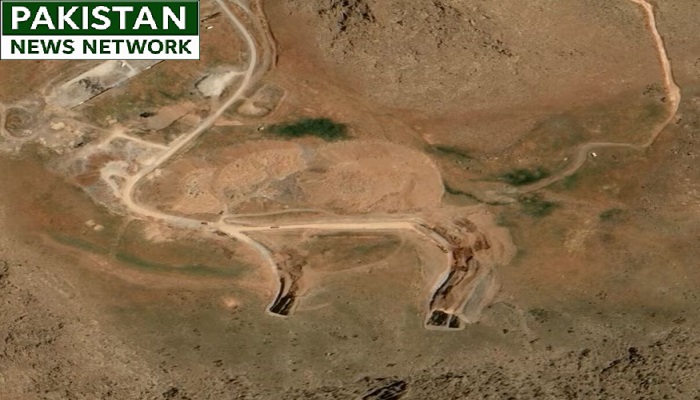
PNN – In a report based on an analysis of satellite imagery and statements from Israeli and Western officials, The Wall Street Journal stated that Iran has rebuilt infrastructure damaged by U.S. and Israeli strikes at a pace exceeding expectations—a development that has raised concerns among Israeli officials.
According to the report of Pakistan News Network; The Wall Street Journal noted that the rapid reconstruction of Iranian facilities—ranging from mountain-based missile sites to bridges, ports, and manufacturing centers—demonstrates the country’s industrial capacity and resilience in the face of an extensive bombing campaign comprising over 20,000 strikes.
According to the report, a military official from the Zionist regime—noting that Tel Aviv was taken by surprise by the speed of the reconstruction—stated that Iran repaired a bridge, which had been targeted by three bombs, in just a few days.
The report adds that this development has led Israeli officials to question the effectiveness of the targets selected for the strikes.
The Wall Street Journal report concludes by citing Ran Kochav, the former commander of Israel’s air defense systems, who emphasized that Iran possesses remarkable reconstruction capabilities and has replenished its weapons stockpiles.
For several days, the United States has carried out successive waves of attacks against targets inside Iran; in response, Tehran has launched attacks on U.S. military facilities and bases across several countries in the region.
On June 18, the U.S. and Iran signed a memorandum of understanding that included a ceasefire and the initiation of talks aimed at reaching a broader agreement. However, on July 8, U.S. President Donald Trump violated the agreement and declared an end to the ceasefire. Washington subsequently resumed its attacks inside Iran, which were met with a crushing response from Iranian armed forces, resulting in strikes against U.S. military bases and facilities in the region.
Israel has previously participated with the United States in two waves of attacks against Iran. The first wave began on June 13, 2025, when Tel Aviv launched a surprise attack on Iranian military and nuclear facilities, followed by Washington’s intervention on June 22 of the same year, involving the bombing of three Iranian nuclear sites.
Meanwhile, Iran responded with missile and drone strikes against several sites within the occupied Palestinian territories, and the confrontation lasted for 12 days.
However, the second wave began on February 28, 2026, when the coalition comprising the United States and the Israeli regime launched a massive air and naval assault against Tehran and other Iranian cities, assassinating Iran’s Supreme Leader, Seyyed Ali Khamenei, and a number of officials. In response, Iran delivered a crushing counterstrike against the Israeli regime using missiles and drones.
This conflict unfolded amidst escalating tensions and the collapse of indirect negotiations regarding Iran’s nuclear program.