
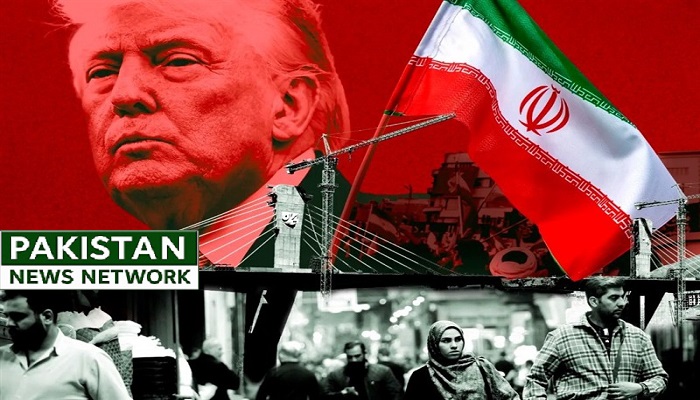
PNN – Contrary to Donald Trump’s promises, the war with Iran has not secured U.S. safety; instead, it has plunged the country into crisis.
According to the report of Pakistan News Network; nearly five months have passed since the start of the war—a conflict U.S. President Donald Trump had pledged would conclude within “six weeks.” Yet today, with U.S. gasoline prices climbing to $4 per gallon, the closure of the Strait of Hormuz, and the deaths of American soldiers, Washington has not only failed to achieve any of its stated objectives but is also facing a wave of criticism from within the Republican Party and from reputable international media outlets.
Above all, Iran’s strategic successes against a superpower like the United States have conveyed a message to nations worldwide that Washington’s military might is not invincible—and this will pose the greatest threat to U.S. hegemony in the coming decades.
The Nightmare Trump Created for America
When Donald Trump ordered massive strikes against Iran in early 2026, White House spokespersons promised a “swift victory” and a “decisive show of force.” However, the reality on the ground revealed a different picture to the world. Far from collapsing, Iran targeted U.S. bases in Iraq, Jordan, Kuwait, and Bahrain with precision missile and drone strikes and closed the Strait of Hormuz to oil tankers. The consequences included a rise in U.S. gasoline prices to $4 per gallon and mounting military casualties—losses the Pentagon is attempting to downplay through censorship and the drip-feeding of information. Yet, voices of dissent—even from within Trump’s own camp—are growing louder by the day.
A Rift among Trump’s Opponents within the Republican Party
Marjorie Taylor Greene, a Republican representative and a hardline Trump supporter, reacted to the deaths of U.S. military personnel in Jordan by explicitly telling the Secretary of Defense: Sacrifice?! What are you talking about?! They didn’t voluntarily give their lives. They were killed because of a war that you, Trump, and your administration started on behalf of a foreign country—Israel. This remark demonstrates that even Trump’s most loyal allies have turned against his policies regarding Iran.
Joey Jones, a Fox News host and veteran of the U.S. military—who was once a staunch supporter of Trump—also sharply criticized the White House’s strategy following reports of new casualties: Simply dropping bombs is not effective. Pointing to Trump’s earlier claims that Iran’s military capabilities had been crippled, he remarked that reality is slapping us in the face. Jones warned that time is running out as Republicans head toward the midterm elections; with every passing week of the war, the president has less leverage and less time at his disposal.
US Congresswoman Melanie Stansbury also sharply criticized Trump, stating: The United States should not have been dragged into this war. Trump has launched an illegal war that is coming at the cost of our soldiers’ lives, thousands of civilian lives across the Middle East, and billions of dollars in taxpayer money. These remarks, which have resonated with lawmakers from both parties, reflect the depth of dissatisfaction with the White House’s foreign policy.
The prestigious Nation magazine ran a headline in an article titled “Trump Cannot Accept That He Has Lost the Iran War”: A costly and devastating war is being reignited simply because an 80-year-old narcissist cannot face the reality of defeat. The publication emphasized that the U.S. faces three difficult options: continuing a war of attrition, returning to negotiations, or waging a full-scale ground war against a nation of 90 million people—a reality Trump prefers to ignore.
Bloomberg, too, wrote in an analysis titled “Trump’s Iran Blunder Shows Strategy Can Beat Firepower”: The United States has largely failed thus far, as costly strategic errors have undermined its military power. This reputable media outlet emphasized that a disparity in strategic competence can offset a vast power imbalance—a major lesson for superpowers.
The Atlantic also published a report noting the deaths of two additional American military personnel—described as terrorists—in an Iranian attack on a base in Jordan, writing: The American people have the right to know why lives were lost and how many more of their children President Trump is willing to put at risk in this war of choice. This fundamental question has now become a primary concern for American public opinion.
The British newspaper Daily Mail, in an article titled “Iran War Pushes Republicans to Breaking Point,” noted that Trump initially told Americans his military adventure in Iran would last six weeks; however, with the collapse of the latest ceasefire agreement and days of renewed attacks, the war has dragged into its fifth month with no end in sight. The Daily Mail emphasized that the MAGA party—built by Trump himself—is staunchly opposed to the continuation of wars, let alone the ‘forever wars’ that Republicans had vowed never to engage in.
The Zionist newspaper Haaretz, pointing to the dangers of the simultaneous closure of the Strait of Hormuz and the Bab el-Mandeb Strait, stated: Trump is caught between two straits, and Iran is in no rush to rescue him.
Yet, perhaps the most significant consequence of this conflict extends beyond casualties and economic costs. Iran’s strategic successes against the United States have instilled a sense of self-belief in other nations: if Iran could stand up to a superpower like the U.S.—and even secure strategic victories—then they, too, can do the same. This implies that countries around the world will no longer yield to Washington’s demands simply out of fear of American military might. This poses a major threat to the United States, a nation that has spent decades using its military power to intimidate other countries and compel their submission. That deterrent capability has now been permanently undermined.
Conclusion
Contrary to Trump’s promises, the conflict with Iran has not only failed to ensure U.S. security but has instead plunged it into an unprecedented crisis. Rising gasoline prices, military casualties, the failure to reopen the Strait of Hormuz, and rifts within the Republican Party are all signs of a strategic defeat—one that even pro-administration media outlets cannot deny. Yet, beyond all this, Iran’s steadfastness has conveyed an enduring message to the world: superpowers are not invincible, and the era of deterrence based solely on military might has come to an end.
As Foreign Affairs has rightly noted, Iran has emerged in a stronger strategic position than it held prior to the war, and the repercussions of this failure will plague the United States long after the conflict ends. Trump, who once promised to “end endless wars,” has now become the embodiment of a warmonger—one who has brought nothing but disaster, not only for Iran but also for the American people, U.S. allies, and the global order.