
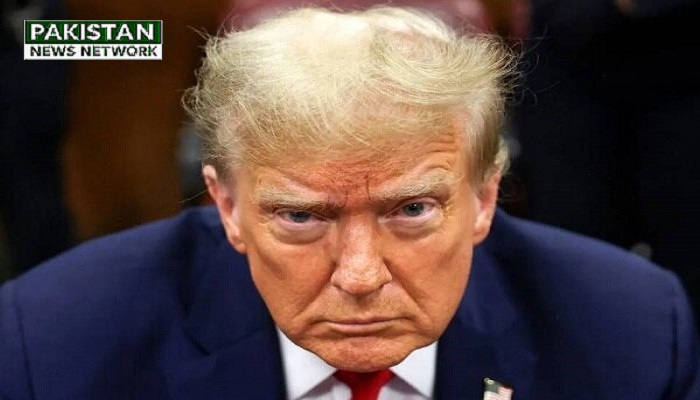
PNN – Facing declining popularity, economic pressures, and a challenging midterm election, Donald Trump has pledged to pay $5,000 to every adult American citizen.
According to the report of Pakistan News Network; on the opening night of the Republican campaign rally in Dallas, U.S. President Donald Trump made an unprecedented promise to American voters, announcing that if Republicans retain their majorities in the House of Representatives and the Senate in the November midterm elections, he would pay $5,000 to every adult American citizen. In his speech, Trump stated: If Republicans win both the U.S. House and Senate; I will pay a $5,000 dividend to every adult citizen in the United States.
The U.S. President, however, offered no explanation regarding the funding source for this payment, likening it instead to corporate dividend payouts. Thus, on the eve of an election set to gauge public support for his administration’s performance, Trump has—rather than presenting a clear economic achievement—directly promised cash payments to voters.
This pledge takes on added significance when viewed against the backdrop of the U.S. political and economic climate leading up to the midterm elections. CNN has reported that Trump faces the challenge of preserving the Republican majority while contending with declining approval ratings, economic pressures, and the historical trend of the president’s party underperforming in midterm elections.
Under these circumstances, the US war against Iran has become a political liability for the Trump administration. CNN reported that the conflict with Iran has driven up fuel costs, with oil prices reaching $100 per barrel on Wednesday—the highest level since July.
Trump has sought to spin this economic consequence into a political promise. At a Republican gathering, he claimed that prices would drop as soon as the US won the war and, in a controversial remark, even suggested renaming the Strait of Hormuz to the “Trump Strait.”
However, this very manner in which Trump speaks demonstrates that the issue of war is no longer merely a matter of foreign policy for the U.S. administration; it is directly linked to the daily lives of American voters. Rising oil and fuel prices can drive up the cost of transportation and goods—potentially becoming an electoral liability for the Trump administration at a time when Democrats have been pressuring Republicans over the rising cost of living.
From this perspective, Trump’s $5,000 pledge can be viewed as a reaction to concerns that economic discontent might translate into electoral dissatisfaction. Instead of merely touting successes in foreign policy and warfare, the U.S. President—at his party’s most important campaign rally—has directly appealed to voters’ wallets; a move that may suggest the Trump administration lacks full confidence in the ability of its current policies to secure public approval.
Notably, in this same speech, Trump urged Republicans to act as though he himself were on the ballot. Addressing the audience, he said: I want you to pretend that I’m on the ballot. I am on the ballot—just one more time.
These remarks indicate that, for Trump, the midterm elections represent more than just a standard congressional contest. Retaining the Republican majority would allow his administration to continue advancing its policies, whereas losing that majority could lead to heightened political pressure and the launch of sweeping investigations by Democrats into his administration. CNN itself has underscored this political significance.
On the other hand, the Republican focus on cultural issues, immigration, and attacks against the progressive wing of the Democratic Party indicates that the Trump campaign is not relying solely on its economic and foreign policy record for the upcoming election. A significant portion of the convention’s opening night was dedicated to attacking progressive Democrats, addressing issues concerning transgender individuals, and discussing immigration policy.
This political mix is noteworthy: on one hand, Republicans tout the achievements of the Trump administration, while on the other, the President promises direct $5,000 payments to citizens to help his party retain its majority. Meanwhile, tensions with Iran are driving up energy prices, forcing Trump himself to address the economic consequences for Americans.
In fact, the $5,000 pledge can be viewed as part of Trump’s effort to buy political time—an attempt to prevent the costs of administration policies, particularly the economic burden of the war, from translating into a backlash against Republicans ahead of the election.
Trump, of course, continues to try to project an image of victory. He claims that prices will drop once America wins the war; yet the political reality facing him is that American voters are far more attuned to rising fuel prices and their own cost of living than to narratives about overseas victories.
For this reason, the midterm elections could turn into a referendum on the policies of the first two years of Trump’s second term. If Republicans lose their majority, critics will view Trump’s $5,000 pledge not as a sign of confidence, but rather as an indication of the U.S. president’s anxiety regarding his political standing.