
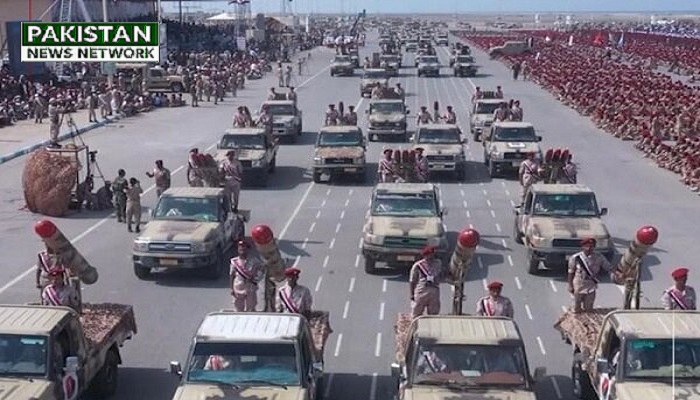
PNN – Ansarullah’s advance along Yemen’s western coast and its proximity to the Bab al-Mandab Strait have altered the dynamics of the war, transforming the group into an influential actor regarding regional maritime security and energy.
Developments over the past few days in western Yemen have ushered in a new phase in the country’s battlefield dynamics. Ansarullah’s rapid advance along the Red Sea coast—reaching areas and islands adjacent to the Bab al-Mandab Strait—represents more than just a shifting of front lines in a civil war; these developments have altered the group’s geographic positioning, granting it new leverage over one of the world’s most critical maritime routes.
Ansarullah’s Advance to the Threshold of Bab al-Mandab
The significance of this development becomes clearer when examining the trajectory of recent advances. In recent days, Ansarullah took control of Al-Mukha; subsequently, its operations extended toward Dhubab and the Hanish Islands, ultimately making Mayun Island—situated at the entrance to the Bab al-Mandab Strait—a focal point of events. Reuters has reported that Yemeni government forces have withdrawn from Mayun and the Dhubab area, and Ansarullah has seized control of Mayun. This development is significant because Mayun lies directly at the entrance to the Red Sea; its location enables any force controlling the island to influence events surrounding one of the world’s most critical maritime chokepoints.
Of course, the significance of Mayun should not be limited to the island itself. The true value of the recent advance lies in a series of interconnected points along Yemen’s western coast. While Al-Mukha, Dhubab, Hanish, and Mayun each hold individual importance, their combined presence creates a different picture; Ansarullah is now positioned to influence coastal developments ranging from the Yemeni interior to the mouth of the Bab al-Mandab Strait. Put simply, the force has evolved from an actor based within Yemen into one whose position is directly linked to Red Sea security and international shipping lanes.
The Bab al-Mandeb is one of the world’s most important maritime chokepoints. This strait connects the Red Sea to the Gulf of Aden and, via the Red Sea, forms part of the shipping route linking Asia to Europe and the Suez Canal. Approximately 10 percent of global oil production passes through this area, and any disruption here could increase both the cost and duration of shipping between Asia and Europe. The strategic importance of the Bab al-Mandeb was also highlighted in recent years when insecurity in the region prompted several major shipping companies to reroute their vessels, opting for the longer journey around Africa instead of passing through the Red Sea.
Therefore, what has unfolded on Yemen’s western coast represents more than just a ground victory for Ansarullah; it marks a significant shift in the group’s “geography of power.” As Ansarullah draws closer to the Bab al-Mandab Strait and secures more territory along the coast, its capacity to influence maritime security and the strategic calculations of regional states grows. This is particularly significant given the current climate, in which maritime traffic in the region is being impacted by the broader Middle East crisis.
US and Saudi Reactions to the Shift in the Balance of Power on Yemen’s West Coast
Saudi Arabia’s reaction indicates that Riyadh does not view this development merely as an internal Yemeni affair. According to an Axios report, Saudi Crown Prince Mohammed bin Salman spoke with Donald Trump twice on Thursday, urging the US President to take direct action against Ansarullah. While Trump opposed direct US military intervention, Washington has simultaneously stepped up its intelligence support for Saudi Arabia. Axios reported that the US administration is increasing its support for Saudi Arabia to counter Ansar Allah’s advance, with Washington prioritizing the preservation of access to the Red Sea maritime route.
This stance by Washington highlights a key point: while the United States does not want developments along Yemen’s west coast to evolve into a serious threat to maritime routes, it is simultaneously unwilling to become directly involved in a new war. Consequently, current U.S. policy combines intelligence and operational support for Saudi Arabia with a refusal to enter the conflict directly.
An exclusive CNN report has also revealed the presence of over 100 U.S. military advisors in Saudi Arabia—personnel who assist the Kingdom with intelligence and target identification. A CNN television report explained that the U.S. provides specific intelligence to facilitate Saudi strikes and assists Riyadh with real-time battlefield observation and analysis.
From this perspective, Riyadh’s request for assistance from Washington should be viewed as a significant indicator of the shifting situation in Yemen. For years, Saudi Arabia has sought to demonstrate its ability to manage the security of its southern borders and safeguard its interests in Yemen. However, with Ansarullah now reaching sensitive areas along the West Coast and closing the distance to the Bab al-Mandab Strait, Riyadh once again finds itself in need of direct U.S. support.
Bab al-Mandeb: A Chokepoint for Trade and Energy
For Saudi Arabia, the significance of this issue extends beyond the security of its southern borders; the Red Sea is also vital to the Kingdom’s economy and oil exports. At a time when the Strait of Hormuz is facing a serious crisis, any escalation of insecurity in the Bab al-Mandeb Strait could place additional strain on export routes and energy supply chains. This dynamic has transformed the situation in Yemen from a regional security matter into an issue with direct economic consequences.
The energy market has also reacted to these developments. Oil prices have risen significantly in recent days, driven by a series of regional events; Reuters reported that Brent crude remained above $105 during Friday’s trading as the market grappled with concerns regarding supply disruptions and energy transit routes. Meanwhile, the International Energy Agency has highlighted growing concerns about a potential drop in oil supplies by 2026 due to crises in the Middle East.
From Battlefield Victory to Strategic Power
Under these circumstances, the significance of Ansarullah’s advances must be assessed as extending beyond the mere number of cities and islands under its control. A military force transforms into a strategic power when it is able to leverage its geographical position into political, economic, and security assets. Ansarullah has now reached a point where its position on Yemen’s west coast can influence the calculations of Saudi Arabia, the United States, shipping companies, and even the energy market.
This advance indicates that the war in Yemen has entered a different phase following a period of relative calm. While the 2022 ceasefire agreement succeeded in de-escalating large-scale hostilities, developments in recent weeks suggest that the balance established at that time no longer possesses its former stability. Ansarullah has not only managed to secure new positions but is also advancing into a territory that holds far greater significance for foreign actors than a typical area within the Yemen conflict.
For this reason, recent victories should be regarded as a turning point in the history of the Yemen war. The true significance of these victories lies not merely in the capture of a city or an island, but in the shift that has occurred in Ansarullah’s position. This force is now situated in the vicinity of one of the most critical global trade chokepoints, a position that ensures its decisions are no longer significant solely to domestic actors within Yemen.
From Al-Mukha to Dhubab and from Hanish to Mayyun, Ansar Allah has significantly bolstered its position along Yemen’s western coast over the past few days. This advance has created a new reality in the Red Sea—one that has compelled Saudi Arabia to seek U.S. assistance, prompted Washington to step up intelligence support for Riyadh, and heightened the sensitivity of energy and shipping markets to the consequences of developments in Yemen. Consequently, the events currently unfolding along Yemen’s Red Sea coast cannot be viewed merely as a continuation of the country’s civil war; rather, they are evolving into part of a broader equation involving maritime security, global trade, and regional energy dynamics.