
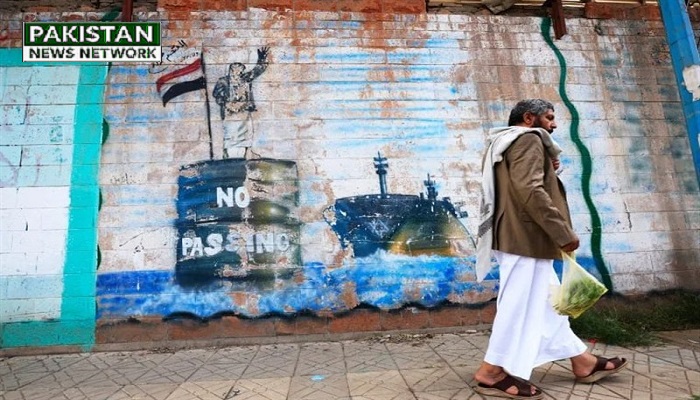
PNN – The defeat of Saudi-backed mercenaries should be viewed as the collapse of a specific military structure, rather than the end of efforts to contain Ansarullah on the West Coast.
According to the report of Pakistan News Network; recent developments on Yemen’s West Coast—specifically the fall of Hays, Al-Khokha, and Al-Mukha—mark one of the most serious defeats for Saudi-aligned forces in recent years. The rapid advance of Ansarullah and the disintegration of the defensive lines held by forces in these areas demonstrate that the issue goes beyond the mere loss of a few military positions; the command structure, organization, and cohesion of the forces assembled on the West Coast with Saudi coalition support over the past years are effectively facing a severe crisis.
The significance of this development becomes even clearer when one realizes that, for Ansarullah, the West Coast is not merely another military front. This region connects to the Red Sea and the Bab al-Mandab Strait; consequently, any consolidation of Sana’a’s forces there strengthens Ansarullah’s position within maritime and regional dynamics. For this reason, the central question is no longer whether Saudi-aligned forces have been defeated—that defeat is evident on the battlefield. The more critical question is whether Riyadh, Washington, and other backers of these forces will be willing to accept this new reality and allow Ansarullah to solidify its position in the region.
Existing evidence points to a negative answer to this question. The defeat of Saudi-backed forces should be viewed as the end of a specific military structure, not the end of efforts to contain Ansarullah on the West Coast. The first indication of this has emerged from within the ranks of that very front: Tariq Saleh has spoken of reorganizing the forces under his command, and reports suggest he has traveled to Riyadh for further coordination. The implication of these developments is clear: an attempt to rebuild a force that has suffered serious setbacks on the battlefield.
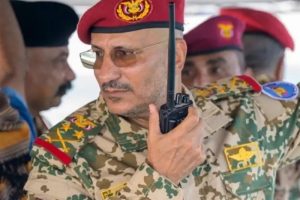
Tariq Saleh is, of course, no newcomer to the West Coast equation. The nephew of Ali Abdullah Saleh, he emerged as a key commander of the anti-Ansarullah front following the collapse of the alliance between Saleh and Ansarullah and the killing of the former Yemeni president in December 2017. The “National Resistance” forces under his command were formed on the West Coast in 2018 with UAE support and played a pivotal role in the coalition’s advance toward Hodeidah. UN human rights sources have described his forces as consisting primarily of former Republican Guard troops and local fighters, organized with UAE backing and training.
Therefore, the reorganization of Tariq Saleh’s forces cannot be viewed merely as a routine structural shift among the forces aligned with the Aden-based government. These forces were originally established to create an effective fighting force on the West Coast and to contribute to military pressure against Ansarullah. In 2018, the National Resistance forces—alongside the Giants Brigades (Al-Amaliqa) and the Tihama Resistance—participated in the advance toward Al-Hudaydah. Now, following the heavy setbacks suffered by this same structure in Hays, Al-Khokha, and Al-Mukha, efforts to rebuild it could pave the way for a new military posture on the West Coast.

Tariq Saleh’s advantage for this role lies in more than just his military background. The structure of the forces under his command has relied on an Emirati support network from the outset, and he has successfully maintained strong ties with both regional and Western actors. Consequently, should Riyadh decide to rebuild the West Coast front, Tariq Saleh is one of the few commanders capable of anchoring such a plan. Yet, the issue extends beyond Tariq Saleh as an individual; the core objective is to reconstitute a cohesive force capable of preventing Ansarullah from consolidating its gains.

In this context, the roles of the United States and Israel are of particular significance. For Washington, Yemen’s west coast is not merely a theater of the country’s civil war; the region lies adjacent to the Bab al-Mandab Strait—a vital passage that impacts maritime security, energy transit, and the link between the Red Sea and the Indian Ocean. Developments in recent weeks, particularly Ansarullah’s approach toward Bab al-Mandab, have underscored the importance of this issue more than ever. Recent reports have also characterized Ansarullah’s advance along the west coast and its capture of Al-Mukha as a direct threat to Saudi and U.S. interests, as well as to the security of maritime routes.
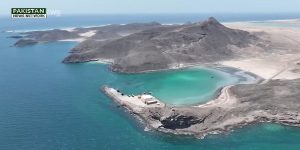
For Israel, too, the issue extends beyond the security of shipping. Ansarullah’s growing capabilities along the West Coast signify the strengthening of a force that has, in recent years, expanded its attacks against Israeli interests and associated shipping lanes. Consequently, Ansarullah’s entrenchment along the Red Sea coast could transform the movement’s posture vis-à-vis Israel and the United States from one based merely on missile and drone capabilities into a more formidable geographic and maritime position. Naturally, Washington and Tel Aviv view such a shift as undesirable.

From this perspective, even if Saudi Arabia lacks the capacity to restore the previous balance on its own, pressure to prevent the consolidation of Ansarullah’s position can continue through various channels. Rebuilding local forces, providing intelligence and logistical support, exerting economic and security pressure, and striving to establish new arrangements on the West Coast are all tools that could be employed in the next phase. The failure of current forces does not signify the abandonment of the objective; rather, it may drive the opposing side to shift its methods.
Past experience has also demonstrated the importance of this region. Following the formation of National Resistance forces and other coalition-backed groups, a large-scale operation was launched to advance from the southern coast toward Al-Hudaydah. In 2018, UAE-backed forces advanced along the West Coast axis with the primary objective of pressuring Ansarullah and capturing the port of Al-Hudaydah. Operation “Golden Victory” was launched with this very aim, involving the forces of Tariq Saleh alongside the Giants Brigades (Al-Amaliqa) and the Tihama Resistance.
That experience demonstrates that the West Coast has never been a secondary front for the Saudi-led coalition. Now, too, the defeat of Riyadh-aligned forces in this region—given Ansarallah’s positions in Hays, Al-Khokha, and Al-Mukha—marks the beginning of a new phase rather than the end of the conflict. A crucial distinction of this phase is that the forces intended to halt Ansarallah’s advance have faced a serious collapse before they could complete their mission.
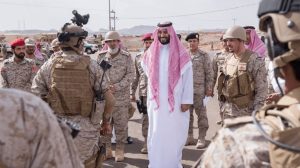
In contrast, Ansarullah now holds a significant battlefield achievement. The movement has managed to rapidly breach the rival’s defensive lines at a crucial point and gain control over one of Yemen’s most sensitive geographical areas. Consequently, any attempt to regroup the opposing front must contend with the new reality that Ansarullah is no longer facing the same battlefield configuration as before.
For this reason, recent developments should not be viewed merely as a tactical retreat by Saudi-aligned forces. What has collapsed is the structure that had been built over the years to contain the expansion of Ansarullah’s influence along the West Coast. Riyadh and its allies must now decide how to fill this void; given the strategic importance of the Bab al-Mandab Strait to the United States and Israel, it is unlikely that these two actors will allow the current situation to become entrenched without attempting to alter the outcome.
However, this does not mean that the restructuring of the opposing front will necessarily lead to a restoration of the previous balance of power. Ansarullah has demonstrated the ability to exploit the structural weaknesses of rival forces and rapidly shift the balance on the battlefield. Therefore, the next phase will be less a test of Saudi Arabia’s capacity to rebuild its forces and more a test of Ansarullah’s ability to translate its recent victories into a sustainable position.