
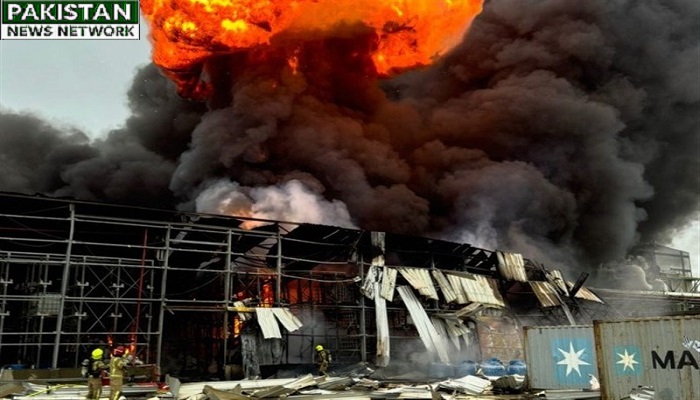
PNN – An Israeli general admitted that despite Israel’s attacks (or crimes) in Iran, Tel Aviv failed to achieve any of its objectives.
According to the report of Pakistan News Network; retired General Yitzhak Brick acknowledged in an op-ed published this Friday in the Maariv newspaper that Iran has succeeded in rapidly rebuilding its military and defensive capabilities following the previous conflict. He noted that Iran retains its uranium stockpiles—which, in the general’s view, are sufficient to produce a nuclear bomb—and remains unwilling to make any concessions; furthermore, he warned that we must not forget that once Trump leaves the White House, we will be left to fend for ourselves.
The note continues: Iran has consistently threatened Israel with destruction. In response, the Israeli military had long awaited an opportunity to strike at Iran’s nuclear and conventional capabilities.
According to the author, this opportunity arose about a year ago during the twelve-day war; the United States subsequently joined the conflict, inflicting heavy damage on nuclear facilities. Both the Israeli military and the United States emerged from the battle buoyed by a sense—or illusion—of victory, believing that Iran had been stripped of its capabilities for years to come.
However, the reality was vastly different. The Iranians managed to rebuild their conventional capabilities in just eight months—a feat that in itself constitutes an existential threat to the Israeli military. Contrary to the claims made by U.S. President Donald Trump regarding the elimination of its nuclear capabilities, it turned out that Iran still possessed 440 kilograms of 60% enriched uranium—an amount sufficient to produce 11 nuclear bombs within a timeframe ranging from a few weeks to a year.
If Iran’s hostility toward the Israeli military was already intense prior to the “Risen Lion” battle, the desire for revenge was subsequently reignited within them.
In another part of the piece, the author acknowledged that the United States sought to force Iran to hand over all its enriched uranium, halt the production of long-range missiles, and end its support for proxy groups in the Middle East; however, when these efforts failed, Trump initiated a war aimed at regime change.
However, this course of action did not yield the desired result. Despite the massive devastation inflicted by US air forces and the Israeli military over the course of a month, the Iranians did not capitulate; instead, they exerted a form of pressure that Trump had miscalculated: the blockade of the Strait of Hormuz, which caused severe economic damage worldwide. Facing intense domestic pressure within the United States, Trump yielded and agreed to a two-week ceasefire in exchange for the reopening of the Strait.
This ceasefire did not lead to any Iranian retreat in any area—neither regarding missiles and uranium enrichment nor concerning support for proxy groups. On the contrary, the Iranians are demanding compensation for war damages, the lifting of sanctions, and the withdrawal of U.S. forces from the region. In all likelihood, should future negotiations take place, Iran will succeed in getting sanctions lifted in exchange for merely a temporary “suspension” of the issues at hand—proceeding on the assumption that, once Trump’s term ends, the new U.S. president will not plunge the country into another war, given the prevailing public sentiment.
Trump took the same “action” regarding the Israeli military that he had taken against Hamas in Gaza and the Houthis (Ansarullah) in Yemen, and sidelined us.
Just hours after the ceasefire was announced, it became clear that the truce was on the verge of collapse. Yet, whether it holds or not, we have once again learned a crucial lesson: Trump acts based on his own interests and those of the United States, not the interests of the Israeli military. He could withdraw his support for the Israeli military at any moment he deems fit—just as he has done in the past. Therefore, even if the conflict with Iran continues, we must bear in mind the possibility that Trump could abandon us at any stage. In short, the Israeli military might find itself the biggest loser of a war in which it had hoped to secure a golden opportunity to defeat the Iranian regime.