
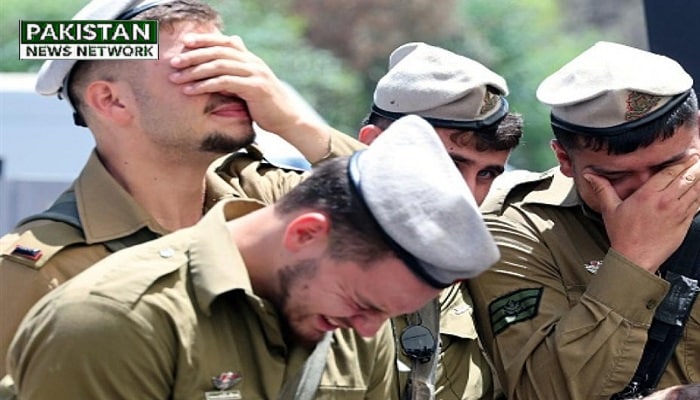
PNN – In a scathing critique of Netanyahu’s cabinet, Yitzhak Brick warned of the worsening mental health crisis within Zionist society resulting from the wars.
According to the report of Pakistan News Network; numerous reports have emerged since the start of the Gaza war regarding a deep mental health crisis within the Zionist regime’s military—including severe conditions such as post-traumatic stress and disorders leading to suicide. Amidst this, Yitzhak Brick—a retired general of the Zionist regime’s army and former military ombudsman—warned in an article about the deteriorating mental health crisis in Israeli society caused by the consequences of the wars.
In an article published in the Hebrew newspaper Maariv, Yitzhak Brick stated that individuals suffering from psychological trauma could turn into a ticking time bomb, threatening Israeli society as a whole.
The Zionist general added that a large number of Israeli soldiers and settlers are suffering from profound psychological effects due to wars, while the healthcare system is grappling with a lack of resources and funding, as well as burnout.
He went on to criticize the long waiting periods for psychological treatment and the complex bureaucratic procedures facing military personnel suffering from post-traumatic stress disorder (PTSD), emphasizing that some are forced to undergo grueling processes to prove their condition to medical boards—procedures that only exacerbate their psychological suffering.
The article further notes that the Cabinet’s limited support for individuals suffering from mental health disorders—coupled with an increasing reliance on associations and grassroots initiatives for care and rehabilitation—adds to the psychological and financial burden borne by patients’ families.
Yitzhak Brick stated that the Israeli Cabinet, led by Benjamin Netanyahu, has failed to prioritize individuals suffering from post-war mental health disorders; instead of funding treatment for those with psychological trauma, it allocates substantial funds to its own election campaigns and to the ultra-Orthodox (Haredi) community.
The Zionist general went on to call for the adoption of a comprehensive plan commensurate with the scale of the crisis—including increased mental health funding, the streamlining of bureaucratic procedures, and the provision of vocational rehabilitation programs for individuals suffering from mental disorders.
He emphasized that neglecting the psychological wounds of war not only threatens the patients and their families but could also impact younger generations’ trust in the military establishment and their motivation to serve.
Meanwhile, the Hebrew newspaper Yedioth Ahronoth quoted Avi Shana, the head of the Israeli army’s medical services, as stating that the military’s medical system is facing an unprecedented reality. The true challenges begin after soldiers are discharged from hospitals, as the treatment and rehabilitation process extends over a long period.
The occupation army official noted that, given the rise in psychological distress among soldiers—compounded by a severe manpower shortage within the military—physical injuries represent only one part of the crisis.
In this context, Yedioth Ahronoth noted that previous reports indicate an unprecedented surge in the demand for psychological support services; approximately 170,000 military personnel—the majority being reservists—have sought psychological treatment for trauma sustained during the war.
Furthermore, numerous mental health professionals were deployed to assist Zionist troops during the fighting, and a dedicated hotline alongside group therapy sessions was established; nevertheless, Zionist experts warn that Israel remains ill-equipped to handle psychological trauma on this scale.
The Associated Press, citing several Zionist military personnel and psychologists, reported that many Israeli army troops suffering from war-related psychological trauma feel aimless, have lost their ability to concentrate, struggle to form relationships with others, and are gripped by a growing sense of hopelessness.