
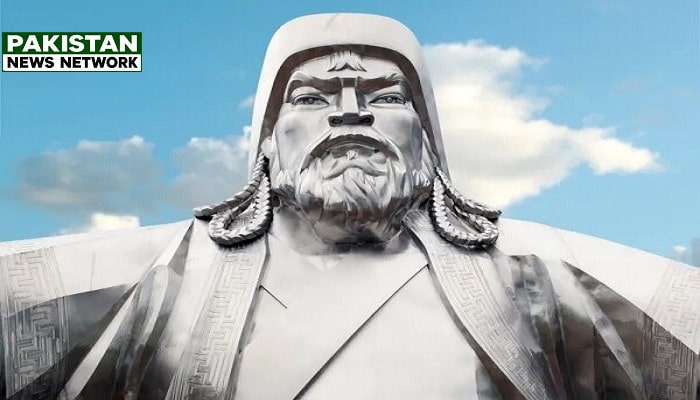
PNN – A Zionist historian deemed the comparison of the regime’s leaders to Genghis Khan an insult to the Mongols, stating that the Mongol Empire, despite its savagery, had clear objectives.
While hatred toward Zionists continues to mount globally following the exposure of their genocidal crimes—most notably evidenced by the emptying of the UN hall during the speech of Benjamin Netanyahu, the criminal Prime Minister of the Zionist regime—a Zionist writer and historian, in an article published in the Hebrew newspaper Haaretz, wryly remarked that comparing the current leaders of the Zionist regime to Genghis Khan, the founder of the Mongol Empire, would be unfair even to the Mongol Empire.
Unlike Zionists, the Mongols Had Strategic Objectives
Reuven Amitai, a Zionist author and historian, emphasized that one of the differences between Israel’s current leaders and the Mongols is that the Mongol Empire—despite its brutality—possessed clear strategic objectives and long-term plans. In contrast, power and brutality alone do not guarantee security; wars require clear goals and a political endgame.
The historian—a specialist in Mongol history in the Middle East—referred to remarks by Assaf Orion, a retired Zionist officer, who had likened the regime’s policy regarding border-adjacent areas to the logic of Genghis Khan.
He added: This comparison is more of an insult to the Mongols than to Israel’s leaders; for Genghis Khan and his successors—despite the massacres and widespread destruction they perpetrated—followed a clearer and more organized strategic logic in their warfare.
The article further notes that the Mongols deliberately employed violence and destruction to intimidate their enemies and force their submission, and that their campaigns across Central Asia and the Middle East during the thirteenth century involved the creation of buffer zones.
Barbarism is a defining similarity between the Mongols and the Zionist regime.
The aforementioned Zionist author noted that there are parallels between the Mongol policy—rooted in barbarism—and the Zionist regime’s policies and security zones in Lebanon, Syria, and Gaza; however, this resemblance is limited due to differences in circumstances and scale.
Reuven Amitai went on to explain that the fundamental difference lies in the nature of their strategic thinking. Despite their brutality and violence, Genghis Khan and his successors established long-term objectives and strove to secure the means necessary to achieve them.
According to this article, Mongol leaders also placed logistical considerations at the heart of their military plans, particularly given that their armies relied heavily on cavalry units and required vast amounts of pasture, water, and horses during long campaigns.
Tel Aviv’s Policy Is Based on Unattainable Goals
The author of this article emphasizes that the Zionist regime’s policy in recent years has been characterized by vague or unattainable objectives and a political-military discourse centered on “absolute victory”—yet without a realistic definition of how to achieve it or the necessary resources.
The aforementioned Zionist historian notes that continuing the war without clear political goals may benefit the government politically solely by maintaining a state of emergency and curtailing the space for debate and dissent.
He further emphasized that even the pursuit of strategic, long-term goals—characterized by violence, brutality, and the displacement of nations—failed to secure lasting military superiority for the Mongols. After nearly six decades of conflict, the Mongols sought to end their confrontation with the Mamluks in Iran and the surrounding regions, ultimately concluding a peace treaty in 1323.
The author believes this historical conclusion carries significant implications: even an expansionist military empire—such as the Mongol Empire—eventually recognized the limitations of military power and the necessity of reaching a political settlement with its adversary.
This article concludes by noting that the history of the conflict between the Mongols and the Mamluks is not merely an account of an ancient war; rather, it offers contemporary lessons regarding the relationship between military power and political objectives. Ultimately, destruction and brutality alone do not guarantee lasting security or supremacy, whereas clear goals, the capacity for long-term planning, and a willingness to negotiate can be vital factors in resolving conflicts.
From this perspective, the aforementioned Zionist historian emphasizes that comparing Israel’s current leaders to Genghis Khan is unfair—even in the context of the Mongol Empire—because that empire, despite its bloody history, possessed a clear strategic vision and ultimately sought peace with its enemies.