
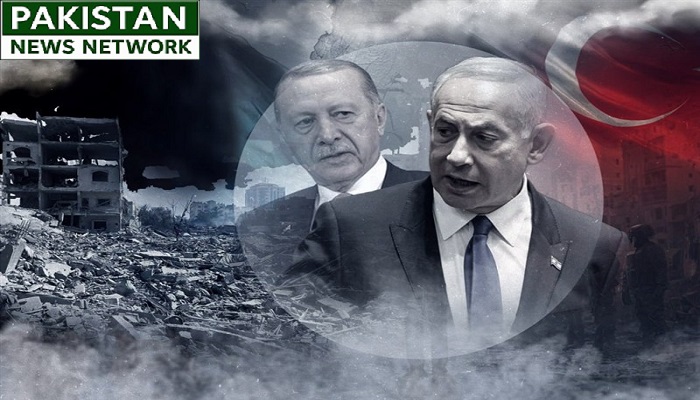
PNN – Think tanks in occupied Palestine, focusing on the “Ikhwani” (Muslim Brotherhood) axis, are attempting to portray Turkey as their new regional adversary.
According to the report of Pakistan News Network; ever since the inception of the illegitimate Zionist entity, the criminal clique ruling occupied Palestine has defined a fundamental, overarching strategy to maintain internal cohesion and advance its foreign policy objectives: a strategy centered on focusing on the existential enemies of the Zionist state and nation and effectively weakening them.
Following Operation Al-Aqsa Flood and the two wars—lasting 12 and 40 days—involving the Islamic Republic of Iran, senior Israeli officials and think tanks in the occupied territories are gradually focusing on the region’s “Muslim Brotherhood axis”—namely Turkey and Qatar—in an effort to define a new adversary and pave the way for a comprehensive military, economic, and political confrontation with them. Targeted attacks on Turkish positions in Syria, intensified Israeli lobbying in Washington aimed at amending the NATO treaty and expelling Turkey from the alliance, opposition to the sale of American F-35 fighter jets to Ankara, the formation of a Greece-Cyprus-Israel coalition in the Eastern Mediterranean, the branding of Qatar as a financial and arms backer of the Palestinian Islamic Resistance Movement, and the recognition of the Ottoman-era Armenian Genocide—these are among the manifestations of Tel Aviv’s organized hostility toward Ankara and its close regional ally, Qatar.
Adherence to the Principle of Air Superiority in the Middle East
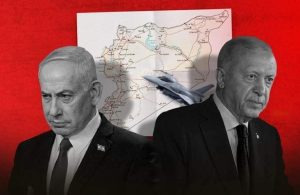
Due to its lack of strategic depth in West Asia, the occupying regime in Jerusalem consistently pursues a policy of continuously weakening its neighbors; this approach aims to forestall the emergence of military, political, and economic superiority among regional states that could threaten its own interests. In the third decade of the twenty-first century, this strategy has taken on a new dimension amidst the intensifying geostrategic rivalry between the United States and China.
The Zionist regime aims to systematically weaken the northern Persian Gulf region—particularly the eastern Arab sub-system—and transform the southern Persian Gulf–Israel corridor into the sole secure route connecting global value supply chains from west to east and vice versa. In this context, Turkey is considered a serious rival to this long-term Israeli plan due to its pivotal role in the “Development Road” and “Middle Corridor” initiatives. In other words, while the Zionists may intend to frame the “Sunni axis” as a new threat following their confrontation with the “Shiite axis,” the underlying logic of this new alignment in West Asia is the determination of the roles regional powers will play within global value supply corridors.
West Asia and North Africa: The Arena of Confrontation between the “Muslim Brotherhood Axis” and “Greater Israel”
The rivalry between the Zionist regime and Turkey is not confined solely to the Levant or the Eastern Mediterranean; these two key regional players also view each other as serious competitors regarding their respective interests in the broader periphery of the Middle East—specifically across the African continent and Eurasia. While there may be some overlap in interests regarding certain issues—such as the conflict between Armenia and Azerbaijan or the transit of energy supplies to Israel via Turkish territory—the fundamental nature of their relationship precludes them from acting as strategic partners, as they face existential conflicts of interest in certain arenas.
For the Netanyahu cabinet, the occupation of a vast swath of territory in southern Syria serves to establish a foothold aimed at preventing the creation of new east-west corridors via that Arab nation’s coast, while simultaneously consolidating Turkey’s position as a regional power.
Tom Barrack: A Transition-Era Envoy or Erdogan’s Wild Card?
At a time when the rivalry—both overt and covert—between Turkey and the Zionist regime has reached its peak, the presence of a figure like Tom Barrack as the U.S. Ambassador to Turkey—and the official overseeing the Lebanon, Syria, and Iraq portfolios—has become increasingly significant in shaping U.S. Middle East policy and managing the Tel Aviv-Ankara rivalry. As a figure close to Turkey, Barrack has sought to legitimize the Turkish presence and influence in post-Assad Syria and to pave the way for lifting the Caesar Act sanctions against the Syrian regime following the ouster of Bashar al-Assad. He is also a proponent of selling F-35 fighter jets to Turkey and supports Ankara’s hardline policies regarding the Kurds.

This key figure acts so vigorously in the service of Ankara’s interests that he has bolstered Erdogan’s position vis-à-vis Netanyahu at the White House, effectively creating a protective shield for Ankara’s interests in Washington. It remains to be seen whether Netanyahu and the Zionist lobby in Washington will tolerate this situation or find a way to oust Tom Barrack from the Trump administration.
Concluding Remarks
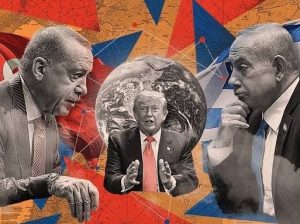
The fragile and volatile Middle East has become—more than at any other time in the past half-century—an arena of rivalry between regional and international powers, with the scope of its crisis expanding horizontally by the day. In this context, the Islamic Republic of Iran, Turkey, and the Kingdom of Saudi Arabia are regarded as the three primary rivals to Zionist right-wing factions seeking regional dominance and the realization of the “Greater Israel” concept.
As the confrontation between Israel and the Axis of Resistance subsides, we must prepare for an escalation of hostilities and a clash of interests between the “Ikhwani” axis—spearheaded by Turkey and Qatar—and the Zionist regime. In this context, given the “zero-sum game” dynamic between Tehran and Tel Aviv, the interests of the Islamic Republic of Iran certainly dictate that it support the Ikhwani axis against Israel and explore various avenues to weaken and challenge the Zionists in the region.