
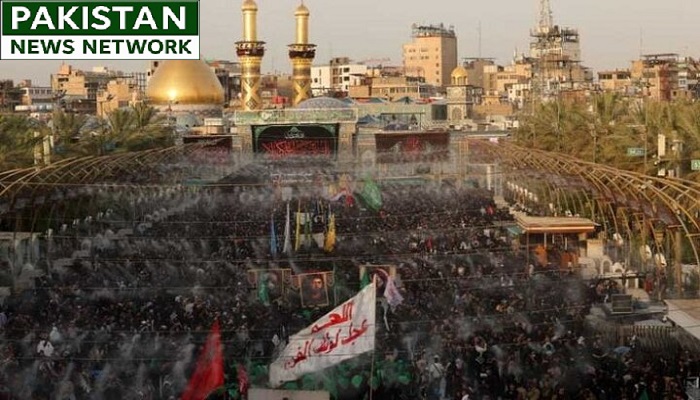
PNN – As Arbaeen—marking the fortieth day after the martyrdom of Imam Hussein (AS)—approaches, millions of Shia Muslims from across the globe are making their way to Karbala to participate in one of the world’s largest annual religious and humanitarian gatherings; an event rooted in history and characterized by unique rituals, such as the pilgrimage walk and the provision of free services to pilgrims.
According to the report of Pakistan News Network; millions of Shia Muslims are traveling on foot toward the city of Karbala in central Iraq to observe the Arbaeen ceremony on the 20th of Safar.
Arbaeen is considered one of the most significant religious observances for Shia Muslims, marked by symbolic mourning processions.
It ranks among the world’s largest annual religious and human gatherings, drawing pilgrims from both within and outside Iraq to commemorate the fortieth day following the martyrdom of Imam Hussein (AS) at the Battle of Karbala in 680 AD (61 AH).
Official Iraqi estimates indicate that the number of participants consistently exceeds 20 million, with figures in some years estimated to range between 20 and 25 million.
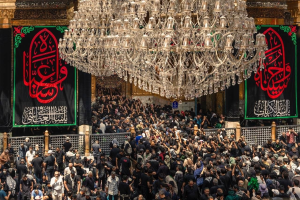
When did this observance originate?
Historically, Arbaeen is linked to the pilgrimage to the shrine of Imam Hussein (AS) forty days after the events of Ashura. Historical accounts state that the first person to visit the shrine was Jabir ibn Abdallah al-Ansari, a companion of the Prophet (PBUH). There are also accounts describing the arrival of Imam Hussein’s family—specifically Hazrat Zainab (SA) and Imam Ali ibn al-Hussein (Imam Sajjad [AS])—in Karbala on that same day, following their return from the Levant (Sham).
However, the massive processions seen today gradually took shape throughout the 20th century. Despite the severe restrictions and bans imposed during certain political eras, the observance resumed with unprecedented scale after 2003, evolving into Iraq’s largest grassroots religious phenomenon.
The Walk and an Expression of Solidarity
The walk to Karbala is considered the most prominent ritual of Arbaeen. Millions of people traverse the approximately 80-kilometer route between Najaf and Karbala over the course of three to five days, navigating their way by following 1,452 numbered pillars. Others travel on foot to Karbala from hundreds of kilometers away—starting from the farthest points of southern Iraq, such as the Ras al-Bishah crossing in the Al-Faw region, or entering via the land borders of neighboring countries.
Participants view this walk as an act of solidarity with the Ahl al-Bayt (peace be upon them), a declaration of loyalty to the values of the Husseini movement, and a commitment to the principles of opposing oppression and corruption.
Complimentary Hospitality
Free hospitality is one of the most prominent features of the Arbaeen observance; families and Hussaini service stations (Mawkibs) compete to provide food, beverages, and services to pilgrims entirely free of charge.
Thousands of Mawkibs set up along the routes leading to Karbala offer comprehensive services, including:
Meals and various beverages
Accommodation and rest areas
Bathing and laundry facilities
Medical services, first aid, and care centers for the elderly
Reflecting this culture, UNESCO inscribed the tradition of providing services and hospitality during the Arbaeen pilgrimage on the Representative List of the Intangible Cultural Heritage of Humanity in 2019.
In a statement, Iraq’s Security Media Cell emphasized the continued arrival of pilgrims and the intensification of security measures to safeguard their movement through border crossings and along major routes.
The statement noted that updated figures as of Sunday indicate the total number of pilgrims entering Iraq since the beginning of the month of Muharram has reached 4,887,660, with pilgrims continuing to arrive from various countries.
The statement further notes that the implementation of the special security and service plan for the Arbaeen ceremony is proceeding in coordination with security, service, and government agencies. The aim is to ensure the safety of pilgrim movement and facilitate the smoothest possible flow of traffic at border crossings and along the routes leading to the city of Karbala in central Iraq. These measures are being carried out under the direct supervision of the Prime Minister and Commander-in-Chief of the Iraqi Armed Forces.
According to the statement, security units and support agencies are continuing to perform their field duties in accordance with pre-established plans, under the supervision and oversight of the High Committee for Mass Pilgrimages.
Al-Zaidi Commends Security Arrangements for Imam Hussein’s (AS) Arbaeen Pilgrims
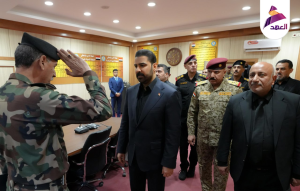
The Iraqi Prime Minister’s Office issued a statement announcing that Ali Faleh Al-Zaidi—Prime Minister and Commander-in-Chief of the Armed Forces, who had traveled to Karbala to oversee the Arbaeen ceremonies—expressed his gratitude and appreciation to the security forces responsible for ensuring the safety of pilgrims in the city.
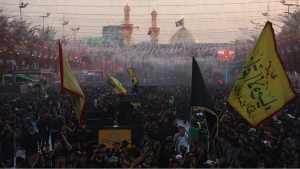
In a message of appreciation transmitted via radio from the Karbala Police command and control center to forces deployed in the field, he commended their extensive efforts to protect pilgrims, ensure their safety, manage the flow of pilgrims, and carry out their duties under challenging weather conditions.
Al-Zaidi noted that the performance of the security personnel—characterized by efficiency, discipline, and dedication—demonstrates a strong sense of responsibility and a willingness to make sacrifices in the service of the homeland and its citizens.
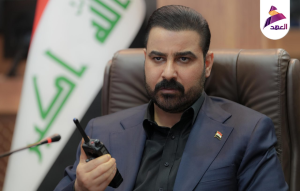
The Iraqi Prime Minister also stated: These sincere efforts are a source of pride and honor, and are deeply appreciated by all Iraqis, as they reflect the security forces’ special dedication to ensuring the utmost success of the massive Arbaeen pilgrimage, maintaining security, and providing a safe environment for the pilgrims.
Iraqi Border Crossings Fully Prepared for Pilgrims’ Return
Meanwhile, Omar Adnan Al-Waeli, Head of Iraq’s Border Crossings Commission, announced the agency’s full readiness to facilitate the return of Arbaeen pilgrims.
Al-Waeli stated that the Commission is operating under a comprehensive plan—in full coordination with security, service, and emergency agencies—to streamline the pilgrims’ return and provide optimal services, thereby showcasing Iraq’s civilized image, excellent organization, and hospitality during this major religious occasion.
Record-Breaking Pilgrim Transport
The Iraqi Ministry of Transport has expressed satisfaction with the flow of traffic during this year’s Arbaeen pilgrimage, announcing the successful and unprecedented implementation of the pilgrim return plan, which utilized extensive public and private transport fleets.
The Ministry added that over 60,000 vehicles—comprising 10,000 government vehicles and 50,000 from the private sector—were mobilized to facilitate the pilgrims’ return. Additionally, the rail network is managing the transport process by deploying 12 trains to operate 20 daily trips between Karbala and the cities of Baghdad and Basra, with the potential to further increase capacity.
The Iraqi General Directorate of Traffic had previously announced that the special Arbaeen pilgrimage plan—involving the coordination of vehicle traffic into and out of the holy city of Karbala—was carried out with the participation of 16,000 police officers and security personnel.
Meanwhile, security and service agencies have intensified their efforts to manage traffic and facilitate the return journey of the pilgrims.