
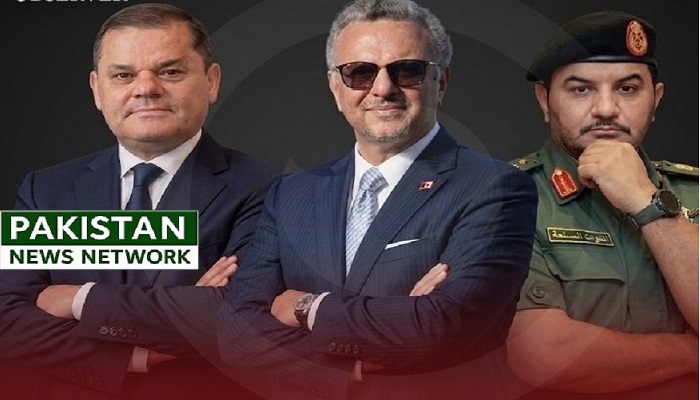
PNN – Masaad Boulos, Trump’s advisor on Arab and African affairs, has proposed an initiative to unify state institutions of Libya.
According to the report of Pakistan News Network, in a significant development that is the first of its kind in recent years, the main rival political institutions in Libya have reached an agreement to end the transitional period, which has lasted since 2011.
According to a joint statement by Aqila Saleh, Speaker of the House of Representatives of Libya, Mohammed al-Munafi, President of the Presidential Council, and Mohammed Takaleh, President of the High Council of State, it has been decided to hold presidential and parliamentary elections simultaneously before February 17, 2027.
At the same time, the Presidential Council issued a document entitled “Roadmap to End the Transitional Phase,” which explains the reasons for the agreement, its legal basis, and the mechanisms for implementing the agreement’s provisions. The document specifically addresses the formation of the High Committee responsible for holding the elections, the characteristics of the upcoming phase in areas such as governance, budget management, and the mechanism for launching a national dialogue and drafting a new constitution in the post-election period.
These developments are occurring at a time when the attention of the United States and Western countries, especially Italy, to the Libyan issue has increased, and Washington’s efforts to bring the views of the Libyan parties closer together and push them towards national reconciliation have intensified more than ever.
Reasons for the Increased Attention of the US and the West toward Libya
In recent years, Libya had not been a focal point for the United States and Europe. European nations—particularly Mediterranean littoral states, led by France and Italy—largely pursued a strategy aimed at managing the conflict and mitigating its security and political repercussions through engagement with key actors on the ground, rather than striving for a comprehensive solution. At times, this approach led to open rifts between Paris and Rome—disputes that even escalated into exchanges of political and media criticism.
With the outbreak of the Ukrainian war and the intensification of the global energy crisis, the priority of Western countries shifted towards the integration of the Central Bank of Libya and the National Oil Company of the country in order to continue oil production and prevent the sector from being dragged into internal political conflicts.
However, from 2024 onwards, there has been a noticeable increase in the focus of the US and Italy on the Libyan crisis. This change is due, above all, to geopolitical and security changes on the African continent; developments that make the continuation of the current situation in Libya incompatible with US interests.
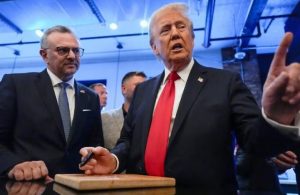
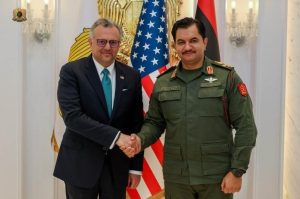
In this context, Mossad Boles, President Donald Trump’s senior adviser on Arab and African affairs, presented an initiative to integrate Libyan government institutions. The United States also participated in joint forces from eastern and western Libya in the Flintlock 2026 exercise, a move that reflects Washington’s efforts to strengthen military cooperation between Libyan parties.
The reasons for the increased attention of the United States and the West to Libya can be attributed to the following factors:
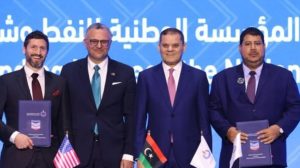
- The need to increase oil production and the interest of American companies in investing in the energy sector: The initiative of Mossad Boles is based on the integration of competing institutions in Libya within a single political framework in order to pave the way for the presence and investment of foreign companies, especially American oil companies. In this regard, Chevron and ConocoPhillips signed agreements with the Libyan government in 2026 to invest in the oil sector.
- Geopolitical developments in the Sahel and Sudan regions: The worsening security and political situation in the countries of the Sahel and Sudan regions and the increasing connection of these developments with the Libyan scene have caused regional and international actors to pay more attention to Libya. From the perspective of these actors, managing developments in Libya can provide the possibility of influencing security and political trends in the Sahel and Sudan regions and also containing the crises in these two areas.
In this context, Libya plays an important role as a link in the transfer of logistical support to the Sudanese rapid response forces from the United Arab Emirates. In turn, Russian forces deployed in the form of the “African Corps” use their bases in Libya to transfer equipment and military and logistical support to Moscow’s allied governments in Mali and Burkina Faso. Therefore, strengthening the US presence in Libya will increase Washington’s ability to influence developments in both cases, namely Sudan and the Sahel region.
- Attempts to contain Russian influence in Libya: After the fall of Bashar al-Assad’s regime in Syria, Libya has become one of the most important links connecting Russia’s supply lines to Africa, playing a key role in supporting both Russian forces and Moscow’s allied governments on the African continent. At the same time, the increasing security pressures on these governments, as a result of the expansion of terrorist groups, the development of separatist movements, the intensification of economic and social crises, as well as the limitation of Russia’s ability to continuously support its allies, have created a good opportunity for Western countries to reduce Moscow’s influence in Africa. In such circumstances, limiting Russian supply lines through Libya has become one of the priorities of the US strategy to reduce Russian influence on the African continent.

The American Initiative in Libya and Its Opponents
According to the information published about the American initiative in Libya, it can be said that this plan is based on a set of general principles, the most important of which is the redistribution of power and influence between the two main players in the Libyan political scene, namely the camp of Abdul Hamid al-Dabiba and the camp of Khalifa Haftar. Within this framework, it is envisaged that Saddam Haftar will gradually replace his father in leading the power structure, and the United States will play a pivotal role in integrating state institutions and expanding investment in the Libyan oil sector.
However, this initiative largely overlooks the roles of other political and military actors in Libya and pays little heed to the structural, political, and social roots of the country’s crisis. Consequently, numerous political and military actors in both eastern and western Libya have sought to influence the shaping of this initiative—and secure a place for themselves in future political arrangements—by engaging with Washington and participating in ongoing consultations.
In this regard, Egypt and Turkey have also increased their contacts with the United States and have tried to propose alternatives to Saddam Haftar, as his name has faced significant opposition and doubts from a number of internal Libyan forces. From this perspective, the joint statement of the Presidential Council, the House of Representatives, and the High Council of Government on determining the date of the elections can be considered an attempt to rearrange the political equations and gain an effective share in the American initiative.
Obstacles to the US Initiative
Despite Washington’s strong determination to advance this initiative, several obstacles could reduce its chances of success, the most important of which are:
- Rivalry within the Haftar family
There is evidence of growing rivalry between Saddam Haftar and some of his brothers, notably Siddiq and Khalid Haftar. The two command important military units in their father’s forces and wield considerable influence. The continuation of this rivalry may pave the way for foreign actors, particularly Russia, to exploit internal divisions to thwart the US initiative.
- Persistent distrust between al-Dabiba and Haftar
Although the US initiative is based on a power-sharing arrangement between the al-Dabiba and Haftar camps, years of distrust between the two sides, coupled with mutual concerns about the balance of power being disrupted – especially if a significant portion of military influence were to be transferred to Haftar – make reaching a final agreement very difficult.
- Ambiguity in the Positions of Regional Powers
The positions of influential regional powers in the Libyan case are still cautious and ambiguous. Countries such as Egypt, Turkey, and Algeria have so far refrained from declaring a clear position on the US initiative, but at the same time, through consultations with Washington, they have been trying to influence the content of this plan and change some of its provisions. It is also unlikely that some of these countries, if they consider the US initiative to be contrary to their interests, will not use their influence over Libyan groups to create obstacles in the way of its implementation.
- Opposition from some Libyan actors
The joint statement of the main Libyan institutions on the timing of the elections is a clear sign of dissatisfaction among some political forces with the direction of the US initiative. However, the number of figures and groups willing to publicly oppose the initiative or try to defeat it is limited, as many of them are concerned about the possible reaction of the US government and the consequences, such as political pressure or sanctions.
Libya’s Political Outlook
The US initiative seems to be able to break the political deadlock in Libya to some extent. Washington’s ability to pressure the Libyan parties to make the necessary concessions, coupled with the threat of sanctions against obstructionists, will be the most important factors in bringing about such a change. However, the main Libyan actors still have several tools at their disposal to disrupt the political equations and thwart the initiative. Therefore, while the plan may help break the political stalemate, its chances of complete success still seem relatively limited.