
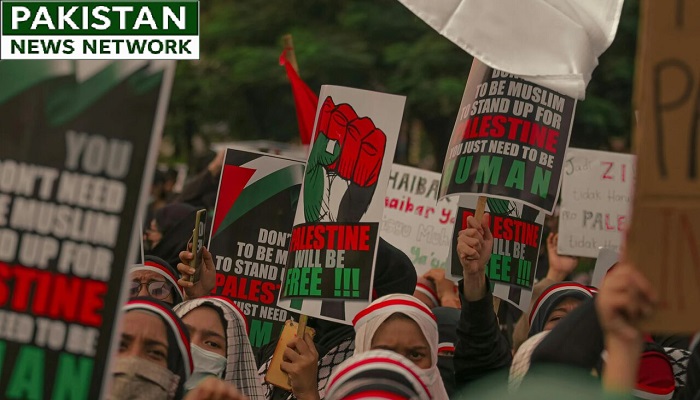
PNN – The Gaza war and the intensifying international isolation of the Zionist regime have upended the traditional foreign policy calculus of Tel Aviv; a regime that long viewed itself as immune to international pressure—backed by unconditional Western support—is now making a forced pivot toward East Asia in an attempt to fill the void left by the erosion of its traditional alliances. This strategy, rather than signaling strength, reflects a geopolitical decline and a desperate bid to escape mounting isolation.
According to the report of Pakistan News Network; analyses indicate that this forced pivot is not the result of an assertive foreign policy realignment by Tel Aviv, but rather an attempt to rebuild networks of security, technological, and economic influence in Asia—a strategy whose prospects for success are now facing serious doubts, more than ever before, amidst the Gaza war, mounting international pressure, and the erosion of traditional Western backing.
According to some analysts, as Tel Aviv faces a rising tide of criticism and political constraints in Europe and the West, it is attempting to offset the void left by cooling relations with certain traditional allies by expanding security, technological, and economic ties in Asia; observers believe this strategy reflects the Zionist regime’s growing need to secure new sources of support against international pressure, rather than signaling strength.
For decades, the diplomatic corridors of Washington, London, and Brussels served as the Zionist regime’s “backyard” and an impregnable stronghold—a realm where resolutions were vetoed before they could even take shape and arms packages were approved without hesitation. Yet, the prevailing narrative within Tel Aviv’s think tanks today is one of awakening from a pleasant “Atlantic dream.”
In fact, the objective reality following the Gaza war reveals that the “ironclad” protective umbrella has developed structural cracks; meanwhile, Western public opinion has turned the streets of London and New York into arenas of protest against Zionism, placing European leaders under crushing domestic pressure and rendering them unable to simply cash in a “blank check” of support for the occupation as they once did.
In this context, Russian analyst Rajab Safarov emphasized in an interview that, prior to the recent war, Israel had always operated under the assumption that the United States stood firmly behind it—believing it could act however it pleased toward its neighbors and other Middle Eastern, Arab, and Islamic nations, with no one daring to cast even the smallest stone in its direction.
He added: During the recent military aggression against Iran, Israel saw that the United States is no longer the superpower Tel Aviv had imagined it to be and cannot guarantee its security.

This traditional rift has confronted Tel Aviv with an existential dread: the prospect of “geopolitical suffocation within its traditional home.”
Amidst this heavy atmosphere, the compass of Israeli diplomacy underwent a forced shift; as the gates to normalization within the Arab world (the Abraham Accords project) were barred by the towering walls of the Islamic world’s outrage, and Western capitals transformed into costly arenas, Tel Aviv’s gaze inevitably turned toward the distant horizons of the East.
In its analysis of this landscape, the specialized Asia-Pacific publication The Diplomat notes that the Zionist regime is currently undertaking a high-stakes gamble to diversify its strategic partnerships in Asia—a desperate scramble to secure new technological and security havens in New Delhi, Tokyo, Singapore, and even Taipei.
This geopolitical pivot is not a maneuver born of strategic abundance, but rather the diplomatic effort of an exhausted regime attempting to offset its historic isolation by operating within the sphere of emerging powers and Asia’s geopolitical blind spots.
Taiwan and the Zionist regime: an illegitimate alliance in the shadow of occupation and partition.
It is precisely within this atmosphere of uncertainty that the diplomatic machinery of the Tel Aviv regime meshes with one of the most sensitive pieces of the East Asian geopolitical puzzle—namely, Taipei.
Finding itself hemmed in by Beijing’s diplomatic encirclement and facing a strategic bind, Taiwan views any opening toward U.S. allies as a chance to breathe.
Conversely, the Israeli regime regards the island as a vital semiconductor hub and a frontline in the rivalry with China; yet, this emerging alignment has stripped the mask from Taipei’s human rights rhetoric.
The island—which for years was trumpeted by Western media as a symbol of victimhood and democracy in East Asia—has now joined hands with a regime that global public opinion identifies as a symbol of apartheid and war crimes in Gaza.
This behavioral contradiction emerged from the shadows of the security apparatus into the public eye with the incident involving the simultaneous pager explosions in Lebanon.
Although the logistical trail of this terrorist operation led to a company registered in Taiwan—prompting Taipei officials to immediately issue denials and sow confusion—astute analysts recognized the event as revealing a hidden yet profound entanglement within the arms and technology supply chains connecting the two parties; an ambiguity that has since given way to an overt alliance, evidenced by public actions.
A tangible and undisguised manifestation of this shift in approach became apparent when news broke of Taiwan’s financial support for the construction of a medical center in the “Sha’ar Binyamin” settlement in the West Bank.
International legal experts and explicit UN Security Council resolutions deem any construction or investment in the occupied territories illegal and a clear instance of occupation.
Consequently, Taipei’s attempt to cloak this move as a “humanitarian project” was rejected by legal circles, as injecting dollars into the economic arteries of Zionist settlements amounts to nothing less than official complicity in entrenching apartheid.
This dangerous game quickly provoked a reaction from the “sleeping giant” of the East—China; from Beijing’s perspective, any diplomatic maneuvering involving Taiwan constitutes a violation of the “One China” principle.
Stern warnings and official statements from the Chinese government indicate that the Zionists’ insistence on investing in the island could come at the cost of losing major economic ties with Beijing—a high-stakes gamble that Tel Aviv, given its current state of isolation, simply cannot afford.
Decoding the Israeli regime’s “Look East” strategy in the shadow of the Gaza war
The Diplomat writes that Israelis, finding themselves trapped in a stifling Western isolation, have packed their diplomatic bags for the East—not for ceremonial visits this time, but to secure new geopolitical breathing room.
In this context, experts describe this move as a “survival network” that Tel Aviv is attempting to weave around key strategic sectors.
In this vein, the Zionists’ initial move involves capturing algorithms within the realms of cyberspace and artificial intelligence to establish themselves as an integral part of Asia’s digital economy and secure diplomatic leverage; subsequent steps shift the focus to the arms trade in geopolitical “blind spots,” where Tel Aviv exploits regional rivalries in East Asia to market its military hardware as a security shield to nations embroiled in territorial disputes.
Ultimately, instrument-based diplomacy and “water hegemony” complete this chain, leveraging Asia’s environmental crises to utilize water management technologies as a tool for political coercion during critical voting sessions in international organizations.
Aluvit Ningtojam, an Indian political analyst, stated that New Delhi serves as Israel’s strategic anchor among its Asian partners; the relationship is evolving from simple buyer-seller arms deals into deep industrial co-development across sectors such as defense, artificial intelligence, water management, cyber-security, food security, renewable energy, and agriculture.
Furthermore, India and Israel have institutionalized this trajectory through several key agreements: a bilateral investment treaty was signed in September 2025 and entered into force on July 4, 2026, and negotiations regarding an India-Israel free trade agreement are believed to be in their final stages.
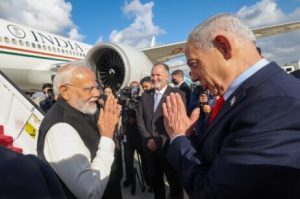
Furthermore, a defense memorandum of understanding—concluded during the 17th meeting of the joint working group in November 2025—commits both sides to expanding defense-industrial cooperation, with a focus on training, technological innovation, artificial intelligence, and cyber-security.
He added that Israel is also interested in deepening existing ties with Vietnam, the Philippines, Singapore, and Thailand, and in strengthening relations with Japan and South Korea, where cooperation currently falls short of its potential.
Noting that Israel is establishing ties with Indonesia, this Indian expert pointed out that many nations are diversifying their economic, technological, and defense partnerships and have long been recipients of Israeli weaponry. These relationships are increasingly evolving from simple procurement to joint production, with Israeli defense companies establishing joint ventures across the region.
In South Asia, for instance, Israel Aerospace Industries’ long-standing collaboration with India’s Defence Research and Development Organisation (DRDO)—supported by private-sector players such as Bharat Forge (Kalyani Group) and the Adani Group—has facilitated partnerships with Rafael to manufacture components for Spike anti-tank missiles and Hermes 900 drones.
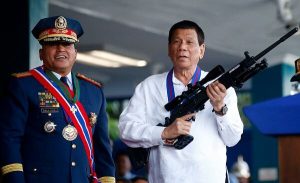
Vietnam purchased Israeli missile systems—including the SPYDER air defense system—and Israeli companies supported the production of the Galil ACE assault rifle in this East Asian nation.
Similarly, defense cooperation between Singapore and Israel, while pursued discreetly and away from media fanfare, has a long history rooted in investments and joint projects.
In this context, Israel Aerospace Industries (IAI) and Singapore Technologies Engineering (ST Engineering) established a joint venture in 2020 called “Proteus Advanced,” aimed at marketing and selling advanced naval missile systems.

While Manila halted arms imports from Tel Aviv last summer, it continues to cooperate with Israel on religious tourism for Filipinos.
Furthermore, the recent deployment of Israeli AI technology to manage irrigation systems in the Philippines is part of Tel Aviv’s effort to expand its influence in civilian sectors, such as food security and climate resilience. Israel seeks to strengthen its position in Southeast Asia by leveraging expertise in cyber-security, agriculture, artificial intelligence, water management, and healthcare to expand cooperation beyond the military sphere.
In East Asia, South Korea’s advanced industrial capacity and its capabilities in dual-use technologies (with both military and civilian applications) have made it a potential partner for expanding joint cooperation with Israel; however, political considerations and regional sensitivities continue to hinder the rapid expansion of these ties.
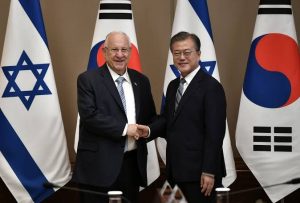
Earlier this spring, amidst escalating tensions between Seoul and the Tel Aviv regime, South Korean President Lee Jae-myung emphasized that human lives and property hold equal value.
However, relations between Israel and South Korea have thus far centered primarily on military and security cooperation—a trend driven by Seoul’s perception of regional security threats and its growing need for advanced defense technologies and equipment.
Alongside defense cooperation, South Korea became the first Asian nation to sign a free trade agreement with Israel in 2021; in recent years, the scope of bilateral cooperation has also expanded to include areas such as vaccine production, emerging technologies, and renewable energy.
From Israel’s perspective, expanding cooperation in the clean energy sector could pave the way for moving beyond a purely security-focused framework and transforming relations with Seoul into a multi-layered economic and technological partnership.
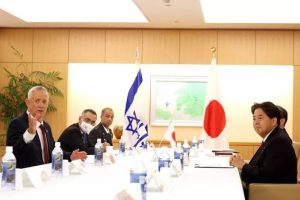
In this context, defense cooperation between Israel and Japan has also gained greater significance in recent years, driven by Tokyo’s military modernization program and its concerns regarding security developments in East Asia—particularly those involving China and North Korea.
For Israel, which seeks to tap into new arms markets and reduce its reliance on traditional partners, Japan represents a significant opportunity.
However, Tokyo has historically proceeded cautiously in developing ties with Israel due to its heavy energy dependence on the Middle East and domestic sensitivities surrounding the Palestinian issue. Although this approach has shifted somewhat in recent years, Japan’s legal restrictions on defense equipment exports remain an obstacle to more extensive cooperation.
Nagasaki Mayor Shiro Suzuki did not invite Israel’s representative to the 2024 ceremony commemorating the city’s 1945 atomic bombing.
Ultimately, this forced pivot to the East is less an assertive maneuver than an inevitable retreat born of desperation.
Asia’s new geopolitical landscape reveals deeply intertwined power dynamics; Israel’s desperate scramble to find a foothold in the East faces serious uncertainty as it collides with the hard rock of international law, global public outrage, and strategic warnings from Beijing.
Thus, future developments will reveal whether Asia will harbor Zionists fleeing the West, or if the Far East will become yet another sacrificial altar for Tel Aviv’s failed and exhausted diplomacy.