PNN – Following the political deadlock in the Zionist regime, various scenarios are being outlined in which Arab parties play a prominent role.
According to the report of Pakistan News Network; following the announcement of the election results in the Zionist regime, rival parties are expected to begin—starting today, Thursday—a lengthy process of consultations and negotiations with other blocs to form a new cabinet, as no single party has managed to secure the necessary majority (61 seats). A similar scenario unfolded during the previous election, ultimately leading to a second round of voting.
Unprecedented Gains for Arab Parties
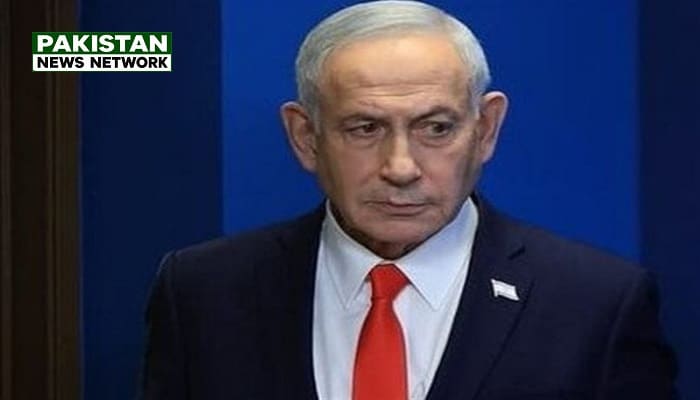
With the opposition bloc—which has secured 48 seats so far—potentially able to rely on the support of Arab parties (which won a combined total of approximately 19 seats, an unprecedented result), it appears that the ruling coalition, led by incumbent Prime Minister Benjamin Netanyahu, has limited room to maneuver in securing the majority needed to remain in power.
Meanwhile, the opposition bloc has thus far ruled out forming a coalition with the Arab parties; this idea faces opposition from most parties within that camp, with the exception of the Democratic Party.
Next week, Isaac Herzog, the president of the Zionist regime, is set to begin consultations with various political parties before formally tasking either Netanyahu or Gadi Eizenkot with forming a cabinet.
On Wednesday, Herzog stated: We must do everything in our power—especially following yesterday’s events—to avoid another round of elections. Therefore, I expect everyone who comes here to arrive with an open mind.
Yair Golan to Meet with Opposition Party Leaders
Yair Golan, leader of the left-wing Democratic Party, stated in his first interview since the polls closed last night that he intends to meet tomorrow with the leaders of three parties to discuss the formation of a cabinet; however, he did not disclose their identities.
In this regard, The Times of Israel reported that the individuals Golan plans to meet include Gadi Eisenkot—a prominent opposition figure—and Yair Lapid, the leader of the Yesh Atid party and a key figure within the opposition camp.
Golan is part of a bloc consisting of four Zionist opposition parties, and he is the only figure among them who has openly expressed support for joining a coalition that includes Arab parties. Speaking to Israel’s Channel 12, Golan said: I hope to meet with all of them by Sunday.
When asked whether Avigdor Liberman, leader of the “Yisrael Beiteinu” (Israel Our Home) party, was among those he intended to meet, Golan did not provide an answer, stating instead that he is working to persuade other opposition party leaders.
He remarked that forming a government has become essential to address security concerns, halt the judicial reforms sought by the current administration, and offer hope to young people who are questioning whether they even want to live in Israel.
Lieberman Severs Ties with Opposition Parties
Meanwhile, Israel’s Channel 12 reported that Avigdor Lieberman has severed ties with his partners in the opposition camp and is not responding to Gadi Eizenkot or Naftali Bennett.
The Israeli outlet emphasized that Lieberman will, under no circumstances, join Netanyahu’s cabinet, nor will he support the formation of a minority government backed by Arab parties.
Channel 12 further reported that Lieberman does not view replacing Amir Ohana—the current Speaker of the Knesset—as a viable option within the current political landscape. This stands in contrast to the views of other opposition parties, which believe that replacing Ohana is a step that could be taken even without the formation of a new government.
The Hebrew-language media outlet noted that Lieberman has realized his efforts to dissolve the Likud party have so far proven unsuccessful; his typical strategy in such situations is to wait. Furthermore, he anticipates an escalation in the security situation, which would likely lead to a political deadlock.
Arab Parties Signal Readiness to Oust Netanyahu
Meanwhile, Arab parties have expressed their willingness to support a government led by the opposition in order to remove Netanyahu and his coalition from power. In this regard, Yousef Jabareen, a leader within the Joint List, told Agence France-Presse (AFP) on Wednesday: Given the current political climate—particularly in light of the ongoing war in Gaza and settlement activity in the West Bank—we see no possibility of joining an Israeli governing coalition.
He added: Nevertheless, should Netanyahu’s cabinet be toppled, we are prepared to support an alternative cabinet.
Meanwhile, Mansour Abbas, leader of the Ra’am party, stated in an interview with Israeli radio on Tuesday: I believe we can overcome the difficulties; furthermore, I think the majority of voters who supported the Eisenkot bloc genuinely wish to see a cabinet that includes the Ra’am party.
The Scenario of Forming a National Unity Government
Overall, the outlook for the future of the Zionist regime’s cabinet remains unclear; however, it is certain that neither of the two main blocs will be able to form a government on its own.
In this context, the scenario of a national unity government—comprising parties from both sides and featuring a rotating premiership between Netanyahu and Eisenkot—remains on the table. This is particularly relevant given recent reports from the United States suggesting that U.S. President Donald Trump might propose this option.
Israel’s Channel 12 reported that Avigdor Liberman supports the formation of a national unity government and expects that Eisenkot will face pressure to facilitate this.
A U.S. official told The Times of Israel that the Trump administration has not yet decided whether to intervene in efforts to form an Israeli coalition government following the elections, and that reports suggesting Washington favors specific coalition scenarios are inaccurate and premature.
Meanwhile, the Hebrew-language newspaper Yedioth Ahronoth reported on Wednesday that Trump favors the formation of a national unity government in Israel that would exclude Itamar Ben-Gvir, the current Minister of National Security.
In recent days, Ben-Gvir had stated that efforts were underway to bring Benjamin Netanyahu and Gadi Eizenkot together into a national unity government—one from which he himself would be excluded.
A Plan to End Netanyahu’s Political Career
In this context, Channel 14—an Israeli television network aligned with Netanyahu’s coalition—has reported on an agreement to form a rotating cabinet. According to this plan, Netanyahu would serve as Prime Minister for the first two years, in exchange for a commitment to permanently retire from political life and the granting of a full pardon; subsequently, Gadi Eisenkot would take over as Prime Minister for the following two years.
The Hebrew-language outlet reported last night that Isaac Herzog is currently working to advance this agreement—a significant political arrangement that could pave the way for the formation of the next cabinet.
The aforementioned Zionist media outlet emphasized that, under the proposed plan, a rotating cabinet would be formed in which Netanyahu would serve as Prime Minister for two years; in exchange, he would commit to permanently retiring from political life and receive a full pardon regarding his criminal cases.
The channel stated that this is an initiative Herzog has been working toward for the past two years, and—provided the distribution of parliamentary seats remains unchanged—it currently appears to be the most realistic option.