
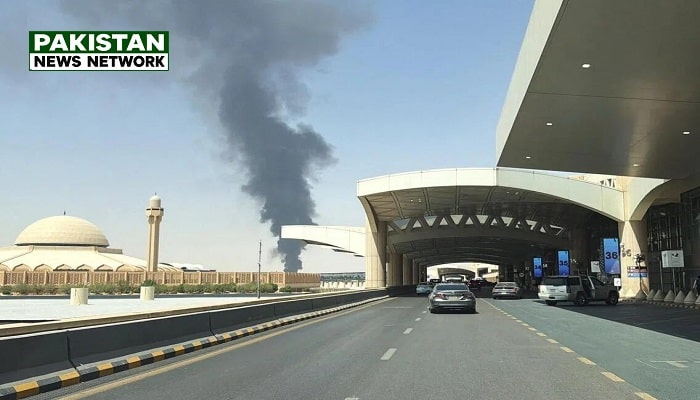
PNN – Between October 8 and 25, approximately 86 percent of scheduled flights at King Khalid International Airport in Riyadh have been cancelled.
According to the report of Pakistan News Network; the “blockade-for-blockade” equation—implemented by Ansarallah against Saudi Arabia since the summer of last year—has gradually extended beyond merely pressuring oil exports and infrastructure to encompass other sectors of the Saudi economy. The significance of this development lies in the fact that, despite its historical reliance on oil revenues, Saudi Arabia has invested heavily in recent years to attract foreign capital, expand tourism, develop transportation, and bolster non-oil economic activities. Currently, sustained pressure on the oil industry—compounded by disruptions to air transport and the increasing difficulty of conducting economic activities—could impose costs on Riyadh that extend well beyond a mere decline in or disruption to oil exports; costs that would not necessarily be offset by a rise in global oil prices.
Since the implementation of this equation began, Ansarallah’s objective has not been merely to cause temporary disruptions in the oil market or to increase Saudi Arabia’s security costs. Targeting export routes, transport and storage facilities, production centers, and infrastructure related to the oil industry is part of an effort to alter Riyadh’s calculations and dispel the notion that the war and blockade against Yemen can be sustained without incurring costs inside Saudi Arabia. In this context, the extension of pressure to airports and air transport should be viewed as another component of this same strategy—one whose impact is not confined solely to the energy market, but extends to areas such as the movement of personnel, business travel, tourism, the hosting of economic events, and investor confidence.
Data regarding the status of flights in Saudi Arabia during October sheds light on the extent of this pressure. According to statistics from the aviation analytics firm Cirium—as reported by Reuters—between October 8 and 25, 4,071 out of 4,736 scheduled flights at Riyadh’s King Khalid International Airport were canceled; this represents approximately 86 percent of the scheduled flights. During the same period, more than 7,800 flights were canceled across Saudi airports, accounting for roughly 45 percent of all scheduled flights in the country. Disruptions at other airports, including Dammam and Abha, indicate that the issue is not confined to a single location but has affected Saudi Arabia’s entire air transport network.
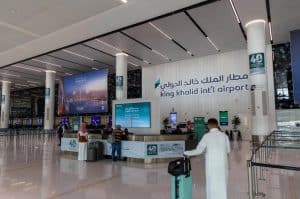
The significance of these figures lies in more than just the number of cancelled flights. Riyadh Airport serves as a primary gateway to the Saudi capital for corporate executives, investors, economic consultants, and business delegations. Any curtailment of its operations—even if some flights are gradually resumed—disrupts airline scheduling and undermines the feasibility of reliable, orderly travel to the country. Furthermore, the suspension of flights by certain international carriers and the postponement of new routes indicate that the repercussions of this situation will not simply vanish with the limited reopening of the airport. To return to normal operations, companies require a reassessment of risk, assurances regarding the continuity of flights, and guarantees for the safety of their staff and clients.
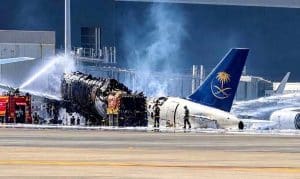
The economic implications of this situation become even more apparent when viewed alongside Saudi Arabia’s efforts to establish itself as the region’s primary hub for investment and commerce. In recent years, Riyadh has anchored a significant portion of its economic agenda on attracting foreign firms, expanding the service, tourism, entertainment, and technology sectors, and hosting major international events. This model relies on stability, reliable air connectivity, and a perception of security and predictability. When travel to the capital faces widespread disruption and key economic events are postponed, the cost of the crisis spills over into the very sectors upon which Saudi Arabia is counting to break its dependence on oil.
The postponement of the Future Investment Initiative summit—often dubbed the “Davos in the Desert”—serves as a clear illustration of this issue. This summit is not merely a ceremonial gathering; it functions as a key instrument for Saudi Arabia to showcase its economic potential, engage with executives from major corporations, and attract international investors. Disruptions to such an event—particularly at a time when Riyadh is striving to position itself as a new global investment hub—carry consequences that extend well beyond the direct costs associated with canceling or rescheduling the proceedings. This situation raises questions regarding the feasibility of implementing economic agendas amidst instability, as well as the Saudi government’s capacity to safeguard critical infrastructure.
This concern is also reflected in recent Bloomberg reports regarding the outlook for the Saudi economy. The core issue in these assessments is not merely damage to infrastructure or a potential decline in oil revenues; rather, it is the vulnerability of Mohammed bin Salman’s economic agenda to the continuation of the war, as well as the increasing difficulty of attracting foreign investment. The non-oil sector now accounts for more than half of Saudi Arabia’s GDP and is intended to serve as the cornerstone of economic diversification in the coming years. Consequently, any factor that disrupts business activities, transportation, tourism, or capital flows directly strikes at a key component of the Saudi government’s most significant economic initiative.
Meanwhile, rising oil prices can help offset some of the costs incurred by Saudi Arabia’s energy sector. At a time when global oil supplies are being disrupted—due to the situation in the Strait of Hormuz and operations by Ansarullah targeting the Saudi oil industry—higher prices effectively increase export revenue per barrel, compensating for a portion of the decline in export volumes. This dynamic serves as a critical factor in Saudi Arabia’s ability to withstand pressure on its oil sector. Consequently, exerting pressure on the oil market does not necessarily equate to delivering a decisive blow to the Saudi economy.
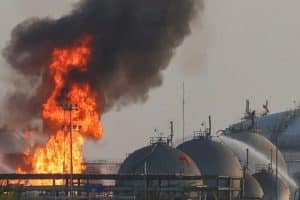
This point underscores the necessity of maintaining pressure on the oil supply chain, while simultaneously extending that pressure to non-oil sectors. There is a significant distinction between a disruption in a single link of the oil industry—versus the simultaneous application of pressure across oil production, storage, transport, and exports, alongside the non-oil segments of the economy. In the former scenario, a rise in global oil prices might offset some of the losses; however, when operational constraints within the oil industry are compounded by disruptions to air transport, reduced predictability in economic activity, obstacles to business travel, and a diminished appeal for investment, higher oil prices can no longer cover the full range of costs. Increased revenue from oil sales does not necessarily translate into continued capital inflows, a thriving tourism sector, the successful execution of projects, or the restoration of confidence among foreign firms.
From this perspective, Ansarallah’s strategy can exert the greatest impact on Saudi Arabia’s calculations if pressure on oil infrastructure and export routes is sustained, alongside pressure on the non-oil sector of the economy. The objective is not merely to reduce Riyadh’s oil revenues; rather, the aim is to shift the costs of the war and the blockade from a sector where losses can be recouped to areas critical to Saudi Arabia’s economic future. In such a scenario, the Saudi government would face not only difficulties in managing its energy infrastructure but also serious questions regarding the security of investments, the continuity of business operations, and the realization of its economic plans.
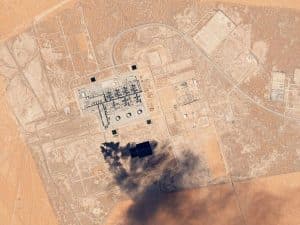
This multi-layered pressure also explains the political logic behind the “blockade-for-blockade” equation. Throughout the years of war, Saudi Arabia has sought—relying on its financial and military superiority—to impose the primary costs of the conflict on Yemeni society, while simultaneously shielding itself from the economic repercussions of the war. By expanding the scope of pressure, Ansarullah has challenged the assumption that Riyadh can continue the war and target Yemen’s vital infrastructure while remaining confident that its own strategic interests will remain secure. In this context, exerting pressure on the Saudi economy serves as a tool to alter the adversary’s calculations and impose costs in response to the continued policy of war and blockade.
Consequently, the impact of recent pressures should not be measured solely by the extent of damage to oil infrastructure or fluctuations in global energy prices. The critical factor is the sustained pressure on the oil production and export chain, coupled with the spread of disruptions to the non-oil sectors of the economy—a combination that limits the ability to offset losses through higher oil prices and directly undermines Saudi Arabia’s economic diversification agenda. Experience has shown that pressure focused exclusively on the oil market is not always sufficient to alter Riyadh’s calculations, as some losses can be recouped through rising prices. What could shift the equation is the interplay between energy-related pressure and broader economic pressure.