
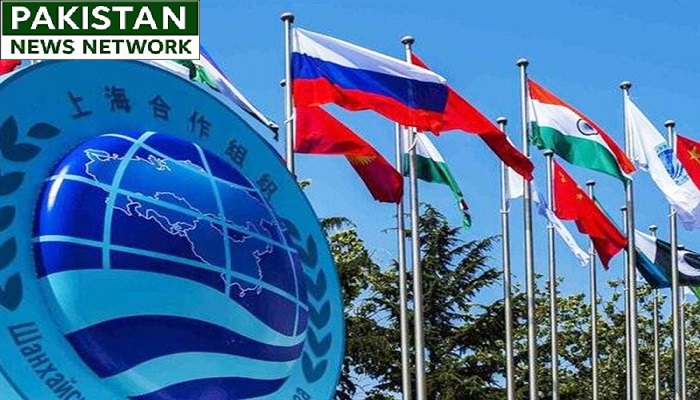
PNN – The Shanghai Cooperation Organization has evolved into a platform for cooperation in the fields of economics, transit, energy, technology, and geopolitics.
According to the report of Pakistan News Network; the text of the commentary by Mohammad Mehdi Iranfar—a senior expert on international affairs—titled: The Shanghai Cooperation Organization: The East’s Path toward a Multipolar Order is as follows:
As the Shanghai Cooperation Organization (SCO) approaches its twenty-fifth anniversary—and coinciding with the 26th meeting of the SCO Council of Foreign Ministers hosted by Kyrgyzstan, attended by the Honorable Foreign Minister Dr. Araghchi—the organization finds itself at the center of regional and global developments more than ever before.
With the participation of China, Russia, India, Pakistan, Kazakhstan, Kyrgyzstan, Tajikistan, Uzbekistan, Iran, and Belarus, the Shanghai Cooperation Organization now encompasses approximately 42 percent of the world’s population and nearly one-third of the global economy. In recent years, the organization has transcended a purely security-oriented framework, evolving into a platform for cooperation in the areas of economics, transit, energy, technology, and geopolitics.
As the international system moves toward multipolarity, the Shanghai Cooperation Organization seeks to play a more prominent role in global dynamics by strengthening regional cooperation and reducing reliance on Western-centric structures; indeed, many analysts view it as one of the most significant symbols of the emerging multipolar order and the rising influence of non-Western powers in the twenty-first century.
Over the past 25 years, this organization has traversed a path marked by both challenges and successes in the realm of regional and international cooperation. This article examines the organization’s achievements over this quarter-century, evaluates the challenges it faces, and explores its future prospects amidst the evolving international landscape.
Achievements of the Shanghai Cooperation Organization
- Strengthening Security Cooperation
The organization’s most significant achievement is the establishment of an effective mechanism to combat terrorism, extremism, and transnational crime. The Regional Anti-Terrorist Structure (RATS)—a subsidiary body—has elevated member cooperation from the level of dialogue to practical action through the execution of hundreds of joint operations. Joint exercises have also enhanced military and security coordination among members and bolstered their capacity to counter shared threats.
- Expansion of Economic, Trade, and Energy Cooperation
The Shanghai Cooperation Organization has gradually evolved into an emerging economic bloc. The combined GDP of its members has reached approximately $29 trillion, and the upward trend in intra-member trade—particularly between China, Central Asia, and Russia—reflects a deepening of economic cooperation. Furthermore, the “Belt and Road Initiative” has bolstered the organization’s geoeconomic dimension through the development of transport infrastructure and investment.
In the energy sector, the organization’s members hold approximately one-quarter of the world’s oil reserves and more than half of its gas reserves. Furthermore, the development of transit corridors—particularly the North-South Corridor—has created the potential to reduce trade costs and transit times between Asia and Europe, while enhancing Iran’s geopolitical standing as a regional connecting link.
- Enhanced Geopolitical Role
The simultaneous presence of major powers such as China, Russia, India, and Iran has transformed the bloc into one of the most significant power centers within the non-Western world. Developments in recent years have fostered increased cooperation among members in the areas of energy, trade, and the use of national currencies, while reinforcing the trend of reducing reliance on Western financial structures. Consequently, the organization has emerged as an influential player in the shaping of a multipolar global order.
Challenges Ahead
Despite significant progress, the Shanghai Cooperation Organization continues to face challenges. Divergent political, security, and economic priorities among member states complicate decision-making processes and the implementation of joint projects. Furthermore, the absence of a common market, an integrated financial system, and effective enforcement mechanisms has resulted in some agreements remaining merely on paper—limited to documents and declarations. The organization’s future success depends largely on its ability to bridge these gaps, strengthen institutional coordination, and translate agreements into operational projects.
Future Opportunities
The most significant opportunity facing the Shanghai Cooperation Organization (SCO) lies in expanding technological cooperation and establishing a shared ecosystem within the digital economy. Leveraging the combined capabilities of member states in areas such as artificial intelligence, big data, cyber-security, digital infrastructure, and innovation can elevate the organization’s status from a traditional framework to an influential global player in the technology sector. Furthermore, collaboration on technology transfer, joint investments, the development of digital platforms, and enhanced joint research will contribute to greater technological autonomy and competitiveness among the members.
In the financial sphere, the expanded use of national currencies, regional payment mechanisms, and innovative financial technologies can reduce reliance on traditional financial structures. Furthermore, the members’ significant capacity in the energy sector—combined with investments in renewable energy—paves the way for enhanced energy security and a gradual transition toward sustainable models. Additionally, the development of transit corridors and infrastructure for transportation, energy, and data elevates the organization’s standing in the reconfiguration of global trade. Realizing this potential could transform the Shanghai Cooperation Organization into a pivotal economic, technological, and geopolitical hub within the emerging multipolar order.
Iran: The Organization’s Geopolitical Link
The Islamic Republic of Iran’s role within the Shanghai Cooperation Organization extends beyond that of a standard member; it is defined primarily by the country’s capacity to interconnect the members’ economic, energy, and transit networks. Iran’s geographical location positions it as a bridge linking Central Asia, the Caucasus, the Persian Gulf, the Indian Subcontinent, and the open seas—an advantage that has gained heightened significance as member states seek to diversify trade routes and reduce their reliance on traditional corridors.
The International North-South Transport Corridor is the most significant example of this potential. By linking India to Iran, the Caucasus, Russia, and Northern Europe, this route significantly reduces transportation time and costs and has the potential to become a major artery for intra-organizational trade. Furthermore, Iran’s strategic position—linking the North-South Corridor with China’s “Belt and Road Initiative”—enhances the capacity to establish an extensive transit network across Eurasia.
In the energy sector, too, Iran—possessing one of the world’s largest oil and gas reserves—can play a significant role in diversifying energy security for the organization’s members. This potential, combined with opportunities to develop energy transmission lines, facilitate oil and gas swaps, and cooperate in the fields of electricity and renewable energy, positions Iran as a key player in energy cooperation within the bloc.
Furthermore, Iran’s experience in combating terrorism, organized crime, and drug trafficking represents a valuable asset for strengthening the organization’s security cooperation. Ultimately, Iran’s significance to the Shanghai Cooperation Organization extends beyond mere economic or security capabilities; it lies in the country’s ability to foster connectivity among trade corridors, regional markets, energy networks, and security frameworks—a role that could significantly enhance the organization’s future cohesion and operational effectiveness.