
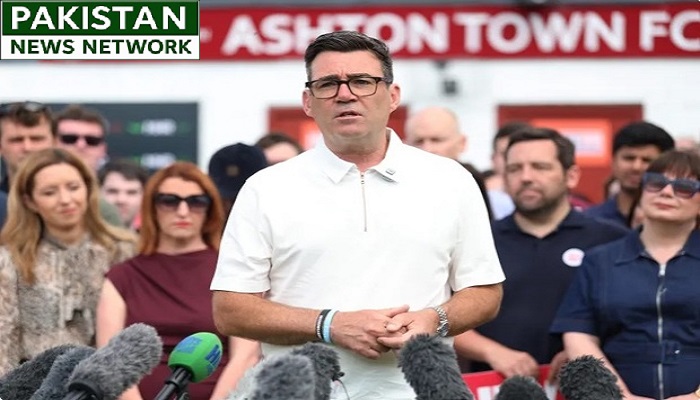
PNN – With the chances of internal competition diminishing, Andy Burnham is the most likely candidate to succeed Keir Starmer. Burnham is expected to steer the party towards a more left-wing approach.
According to the report of Pakistan News Network, quoted by Al Jazeera, Keir Starmer resigned from his position less than two years after becoming British Prime Minister, and British and American newspapers examined the resignation and its consequences, as well as expectations regarding his potential successor, his chances of success, and the challenges he will face.
Robert Schrimsley, writing in the Financial Times, argues that Starmer’s resignation was inevitable months ago, and that the timing of his early exit is more indicative of a deeper crisis within the Labour Party than the outcome of a particular election. He believes that the growing ascendancy of Nigel Farage’s Reform Party has created fear among Labour MPs, who see the party as an exceptional threat that cannot be ignored.
Candidates to replace Starmer
The author says that with the chances of internal competition diminishing, Andy Burnham is the most likely candidate to succeed him. Burnham is expected to move the party towards a more left-wing approach, through an increased role for the government, higher taxes and perhaps more nationalisation or regulatory tightening.
The article warns that the change may win back left-wing voters, but will leave the government facing difficult economic challenges, particularly with rising borrowing and resource constraints. It concludes that a change of leadership will not solve structural problems and that Burnham’s success, if he takes office, will test his ability to balance political ambition with economic reality.
It has also been said that the most prominent potential candidates in the Labour Party besides Burnham are:
Wesley Streeting, the health minister in the Starmer government and one of the most prominent leaders of the Labour Party, who resigned about a month ago and has the support of some MPs who want a less left-wing leadership from Burnham.
Rachel Reeves, the finance minister. She represents the relatively conservative economic wing of the party and is trusted by the markets and financial institutions. But she is not a strong popular candidate in the party compared to Burnham.
Despite these names, Burnham is in a very advanced position due to his high popularity as mayor of Manchester and his ability to connect with voters in the north of England, a region that is crucial for elections.
In an article in the New York Times, Steven Castle discusses Burnham’s rise, saying that after his decisive victory in the parliamentary by-election in the constituency of Makerfield, he is closer than ever to achieving the goal he has pursued twice before without success: to lead the party and then to Downing Street.
Studying English Literature
Born in Liverpool in 1970, Burnham grew up in a middle-class family in the north-west of England. He read English literature at Cambridge University before embarking on a political career as an assistant to a number of Labour MPs and ministers. He was elected as an MP in 2001 and held government positions under Tony Blair and Gordon Brown, handling economic, cultural and health portfolios.
Cassell continues to look to Burnham’s popularity, explaining that after Labour’s defeat in the 2010 election, he ran for the party leadership twice, first finishing fourth and then losing to Jeremy Corbyn in 2015. In 2017, he decided to leave Westminster and focus on local work through his role as Mayor of Greater Manchester.
Economic Affairs
But his critics believe he is an overly flexible politician who is able to adapt to different trends within the Labour Party, raising questions about the clarity of his political direction. He also faces doubts about his ability to manage the national economic affairs, particularly after comments that raised concerns about his stance on markets and public spending.
In Britain’s Guardian newspaper, Polly Toynbee advises Burnham, suggesting he focus on early impressions, and says that Starmer’s failure to create an effective political image from his early days in power was one of the reasons his government lost popularity.