
PNN – The latest statistical data shows that the shock from the war against Iran has gone beyond the energy market and has contributed to the disruption of air travel, with 13,000 flights canceled and about 2 million seats removed from international airline schedules in May.
According to the report of Pakistan News Network; Airlines have cut nearly 2 million seats from their May flight schedules in the last two weeks of April, with the number of flights cancelled this month reaching around 13,000, according to findings from aviation analytics firm Cirium. The figure comes as the UK school holidays approach, raising concerns about disruption to family travel.
According to the report, global flight capacity fell from 132 million seats to 130 million in May, and airlines have replaced larger planes with smaller fleets on some routes in an effort to reduce fuel consumption, in a move that may appear to be a technical cost management measure, but experts say it is a sign that the fuel crisis is becoming part of the aviation industry’s daily planning.
The Daily Telegraph reported that the wave of flight cancellations came as a shortage of jet fuel in Europe became a major concern for governments and airlines. The war against Iran and disruption to energy flows through the Strait of Hormuz has put fresh pressure on the global market for oil and refined products, including jet fuel.
British Airways, the UK’s flag carrier, Turkish Airlines, the national carrier of Turkey, Lufthansa, the German airline, and Air France, the national carrier of France, are among those that have cut some of their flight schedules. However, the consequences of the crisis are more pronounced for the UK, which is more dependent on jet fuel imports than some European economies.
The British government has sought to reassure in recent days that there is currently no “immediate problem” with jet fuel supplies, while also laying out plans to reduce disruption to summer holidays and prevent last-minute cancellations. The Department for Transport said it was consulting on temporarily suspending some rules governing flight schedules at airports so that airlines can change their plans sooner and avoid passengers facing a sudden crisis at the airport.
Under so-called “use it or lose it” rules, airlines must use a significant proportion of their slots to retain access to busy airports, or risk losing them to competitors. The UK government is now considering temporarily easing this pressure to allow airlines to cut back on infrequent or repetitive flights and move passengers onto fewer, more efficient flights.
The British government has asked domestic refineries to increase jet fuel production as much as possible, while alternative import routes, including from the United States and West Africa, are being explored. Goldman Sachs has also warned in a note that the risk of jet fuel shortages in Europe this summer is serious, with the UK being the most vulnerable due to its high dependence on net imports. This assessment shows that the current crisis is not only caused by rising crude oil prices, but also that the market for refined products, including jet fuel, is facing serious bottlenecks.
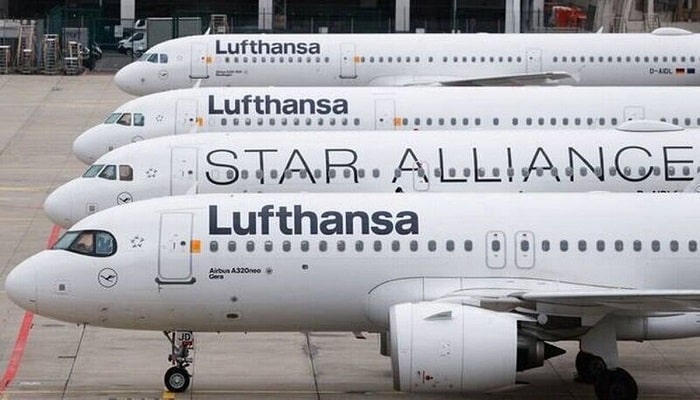
Lufthansa, one of Europe’s largest aviation groups, is one of the companies taking more aggressive steps to reduce its flight schedule, cutting 20,000 short-haul flights from its summer schedule, according to the Telegraph. The decision shows that major European carriers are not just responding to the crisis by raising ticket prices, but are also operationally redesigning their flight schedules. For passengers, the consequences of this trend can be flight time changes, airport changes, transfers to other flights or, in some cases, complete cancellations. Routes with multiple daily flights are likely to be more susceptible to schedule consolidation than others, as airlines can accommodate passengers from multiple flights on one or two smaller flights.
The British media say that the political importance of this crisis for the government is not small. In recent weeks, Keir Starmer’s government has tried to portray the consequences of the war against Iran at a manageable level, but the chain effects of the energy crisis are now appearing in areas that are directly related to people’s daily lives. After the increase in fuel costs, concerns about food inflation and pressure on transportation costs, the aviation industry has now become one of the obvious fields of this pressure. This situation also highlights a clear contradiction in the approach of Western governments. Countries that speak in the political and media arenas of the necessity of managing tensions have in practice been faced with the consequences of war, which themselves have played a role in the formation and continuation of the tense atmosphere around it.
Disruptions in the energy and jet fuel markets show that the cost of geopolitical adventures is not just confined to distant fields, but will sooner or later return to airports, family trips and the pockets of European citizens. Experts believe that with continued uncertainty about the state of fuel supplies and the sustainability of energy flows, airlines will likely be forced to reconsider their summer plans in the coming weeks. Although the British government is trying to avoid last-minute chaos by temporarily changing airport regulations, the cancellation of thousands of flights in May shows that the fuel crisis caused by the war with Iran has plunged the global aviation industry into a new phase of uncertainty.