
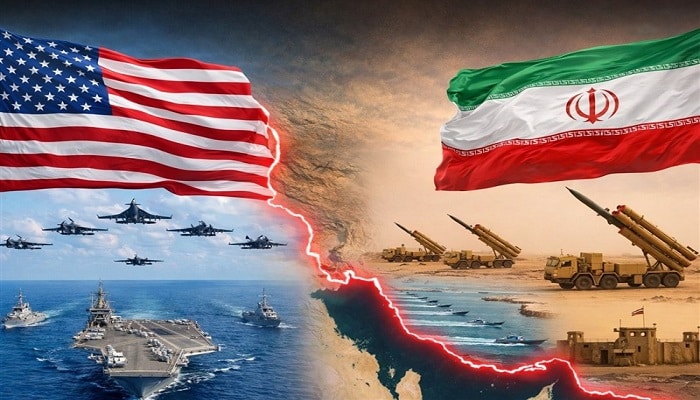
PNN – Confidential documents revealed: War with Iran has severely damaged America’s standing in Azerbaijan and the Islamic world.
According to the report of Pakistan News Network, after the start of the war with Iran, public opinion and attitudes towards America in Azerbaijan have deteriorated sharply. This is clearly confirmed by diplomatic cables and top-secret documents recently sent by the US Embassy in Baku to the headquarters of the US State Department in Washington.
The American magazine Politico recently gained access to a significant collection of confidential and classified documents that were transmitted to the State Department from the US embassies in Bahrain, Azerbaijan and Indonesia.
The diplomatic cables emphasize that direct conflict with Iran poses serious threats to the US global security relations network and causes deep and irreparable damage to the country’s image and reputation in the Muslim world.
According to the leak, these warning cables were transmitted to Washington on April 15. American diplomats based in the capitals of these countries have painted a worrying picture: the United States is currently under heavy information and media pressure from pro-Iranian forces, who are demonstrating extraordinary initiative in cyberspace and digital networks.
Stalling and Declining; the Critical State of Washington-Baku Relations
American diplomats based in Baku are expressing concern that Washington’s bilateral relations with the Republic of Azerbaijan, which had shown significant and significant progress before these events, have now stalled.
The document states that these relations are “at best in a state of stagnation and stagnation, and based on available evidence, are declining and deteriorating.”
Similar reports of American challenges are emerging in other Muslim countries in the East. American diplomats in Manama, Bahrain, report that the government is facing a wave of public questions about whether the United States has abandoned its ally in the face of Iranian missiles and drones. Indonesia’s leader, on the other hand, is likely to face growing public pressure to reduce defense ties with the United States.
Bahrain and the United States are traditionally staunch allies, with the US Navy’s Fifth Fleet based in the Middle East. However, according to the cable sent from Manama, the war with Iran has created a perception in Bahraini society that Washington has abandoned Bahrain and is focusing solely on defending Israel.
Social media accounts, which are often pro-Iranian, are heavily promoting the idea that the US military presence has turned Bahrain into a military target.
One of the most viewed posts posed this ironic question: Why are US military forces stationed in hotels and among civilians? Is it worth it for an American who sacrificed the Persian Gulf for the security of Israel and the goals of Benjamin Netanyahu to risk the lives of the people of Bahrain?
Making the diplomatic situation more difficult for Washington is that Bahraini state-controlled media outlets have focused their news solely on the country’s military’s successes in intercepting Iranian targets, while ignoring the role of US aid. The confidential cable speculates that this cover-up may have been aimed at ensuring the safety of US personnel stationed in the country.
At the same time, diplomats also point out that the British embassy’s impressive social media activity has created the false impression that Britain is filling the void in areas where the United States is withdrawing.
From alignment to criticism; a significant shift in public opinion in the Republic of Azerbaijan
According to a cable received from the US Embassy in Baku, a war with Iran could destroy all the achievements made after Donald Trump mediated the peace summit between the Republic of Azerbaijan and Armenia in August last year.
After that meeting, the Azerbaijani media (which is mostly pro-government) provided more positive coverage of US regional policies, and pro-American sentiment among the public grew somewhat. In the first month after the US and Israeli attack on Iran (February 28), the Azerbaijani press adopted a neutral stance. Even the incident involving an Iranian drone in Nakhchivan sparked a wave of nationalist anger against Tehran.
But in April, the media’s approach suddenly changed. The majority of the media blamed the US and Israel for starting the war and accused them of not having a strategy to end the crisis.
Despite the increased criticism of Washington, there is no evidence of a growing pro-Iran bias in the Azerbaijani media. A significant portion of them still maintain their secular views and view the Iranian regime negatively.
America’s Information Paralysis and Internal Strangulation at the State Department
The leaked cables paint a stark picture of the gradual erosion of trust in America. They include veiled pleas for the Trump administration to give embassies more latitude to counter anti-American narratives.
Currently, US diplomatic missions are barred from producing independent content about the war. They are ordered to republish only messages approved by the White House or the State Department headquarters. This inaction comes as the Iranian side consistently uses memes and opinion leaders.
The tense atmosphere within the US State Department has also exacerbated the situation. According to informed sources, many diplomats are afraid to express their views openly for fear of confrontation and retaliation from a government that demands absolute loyalty. As a result, US missions are drafting their reports with extreme caution.