
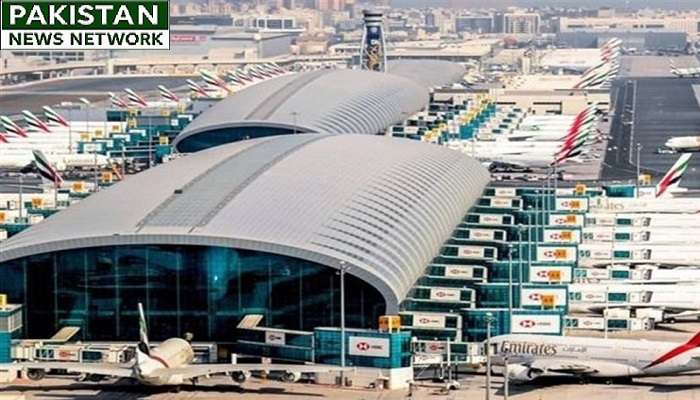
PNN – Dubai Airport has announced a drop of more than 31% in passenger numbers during the first half of the year due to the repercussions of a regional war.
According to the report of Pakistan News Network; while Persian Gulf states have paid a heavy price—across economic and security sectors—for hosting US bases and collaborating with the US in its criminal war against Iran, Emirati sources have reported a 31.3% decline in passenger traffic through Dubai International Airport during the first half of the year; the conflict involving Iran has disrupted air traffic across the Persian Gulf, including at Dubai’s bustling international travel hub.
According to Arab media reports, Dubai Airports stated that Dubai International Airport handled 13 million passengers in the second quarter, bringing the total for the first half of the year to 31.5 million—compared to 46 million during the same period last year.
Prior to the war, Dubai International Airport had projected that nearly 100 million passengers would pass through the airport this year.
According to the report, the total number of flights at this airport reached 150,600 in the first half of the year, marking a 32.1% decrease compared to the same period last year.
UAE sources stated that widespread disruptions in the aviation sector—including flight cancellations, rescheduling, and rerouting—occurred following the outbreak of the war on February 28.
However, the consequences of this situation extended beyond the Persian Gulf region, as high jet fuel prices have put global airlines under pressure.
Meanwhile, regional airlines—including some of the world’s largest carriers—have experienced significant disruptions to their flight networks due to the conflict.
Although more airlines have resumed flights across the region, major carriers such as Lufthansa, British Airways, and Singapore Airlines are still operating at reduced capacity.
However, in the UAE, a risk assessment by a real estate platform monitoring Dubai’s rental market indicates that the conflict has paralyzed the country’s tourism sector, driven by a drop in incoming travelers and a mass exodus of tourists and expatriates due to insecurity.
Meanwhile, property owners face mounting challenges—including a higher risk of tenant rent defaults and premature lease terminations—as well as diminishing investment returns caused by an oversupply of properties and an increasing number of units remaining vacant for extended periods.
In a note issued in March and endorsed by the Association of Great Britain & Ireland (AGBI), the digital real estate platform “Takim” stated that restaurant closures, mandatory furloughs in the retail sector, and layoffs in the hospitality and hotel industries are directly impacting tenants’ long-term ability to pay rent.
The report indicates that expatriates make up approximately 90% of Dubai’s population—with the majority being renters—a factor that renders the rental market particularly sensitive to fluctuations in economic conditions.
However, Dubai’s tourism sector indicators showed a significant decline following the outbreak of the war involving the US and the Zionist regime against Iran—and the resulting repercussions for countries hosting US facilities and bases, most notably the UAE. Imran Farooq, CEO of the real estate marketing firm Pixl Group and the market intelligence company Invespy, told AGBI that hotel occupancy rates during the conflict fluctuated between the low single digits and the low double digits.
He added that Dubai’s real estate market is heading toward a bottoming-out phase, with some residents beginning to look for smaller residential units.
Employees at nine hotels in Dubai reported being laid off, facing a 45% salary cut, or being asked to take unpaid leave.
Real estate market performance is directly linked to external factors—such as oil prices, global trade trends, tourism sector performance, and regional geopolitical stability; consequently, any slowdown in these areas rapidly impacts hotel occupancy rates, rental levels, and investor returns.
Dubai’s real estate sector is viewed not merely as a service industry but as a broad economic driver that fosters job creation and capital attraction while supporting related sectors such as construction, finance, asset management, and real estate services.